30 Japandi Living Room Ideas for a Calm, Minimal & Stylish Home
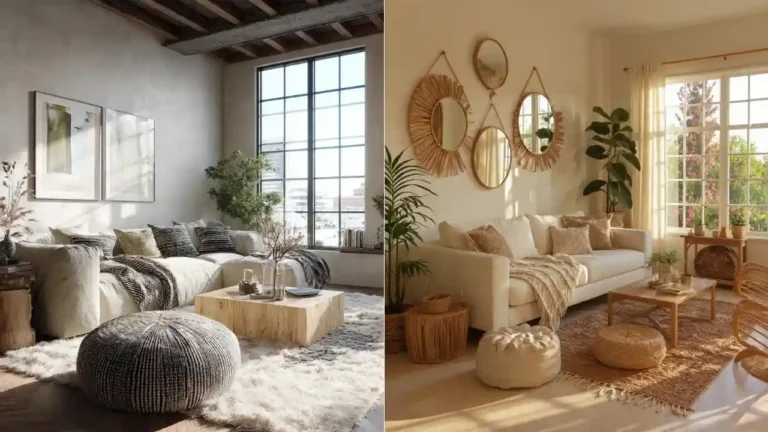
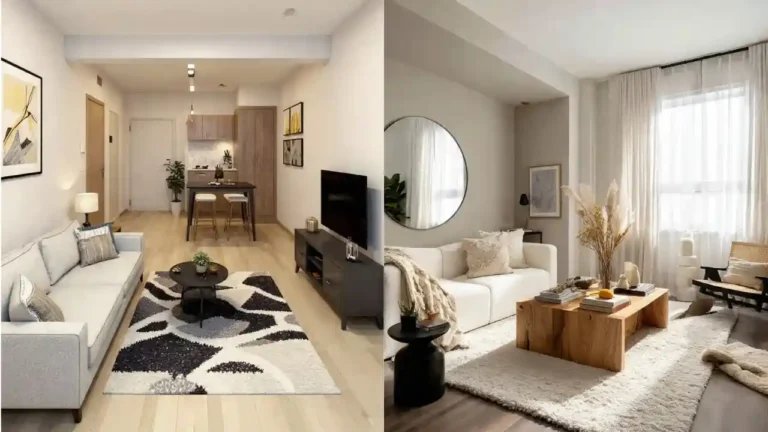
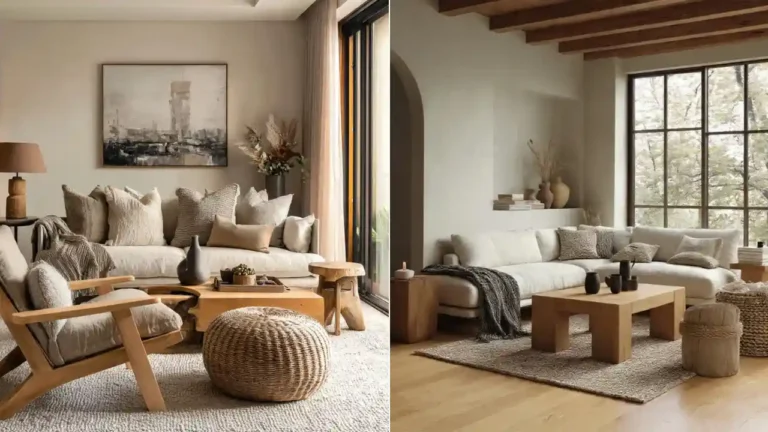
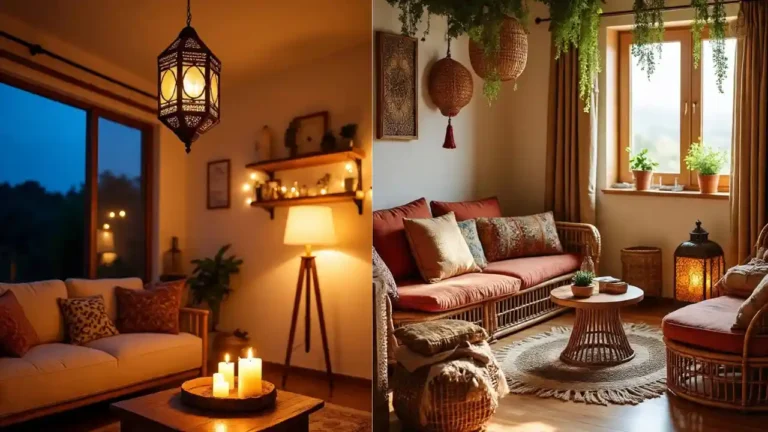
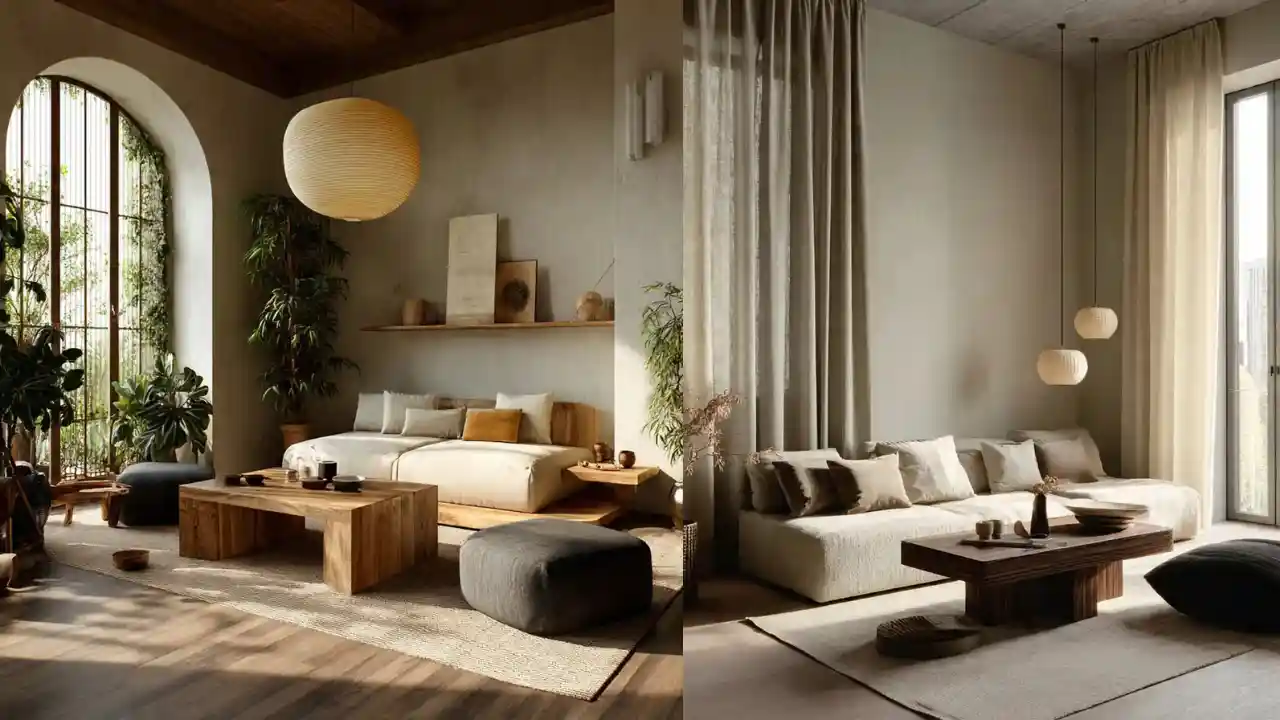
Japandi style blends the clean minimalism of Japanese interiors with the warmth and coziness of Scandinavian design. This approach focuses on simplicity, natural materials, muted colors, and functional elegance. These 30 Japandi living room ideas by The Interior Bloom will help you create a serene, clutter-free space that feels modern, stylish, and inviting.
1. Embrace Neutral Base Colors
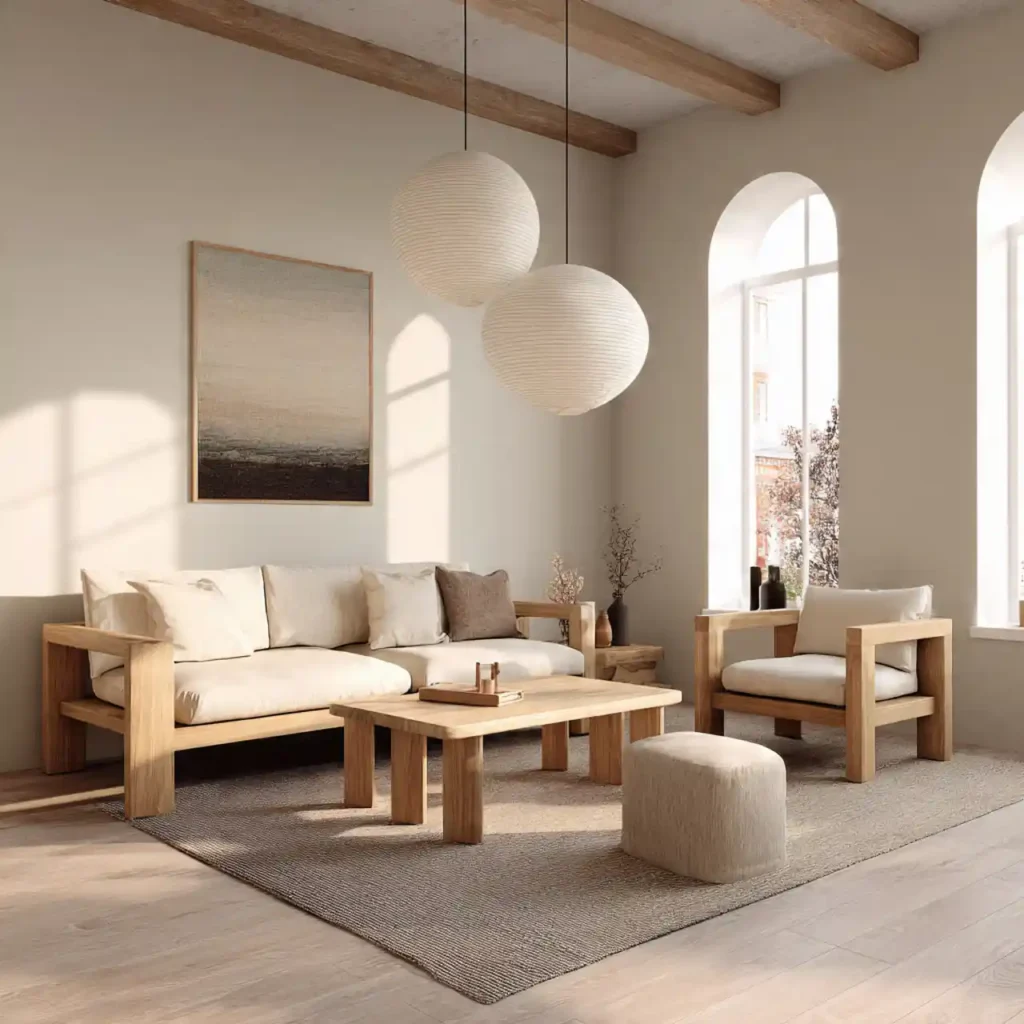
Start with muted tones like beige, taupe, gray, and soft white to create a calm foundation. These colors instantly make the living room feel serene and airy. Neutral bases allow natural wood and accent pieces to stand out.
2. Use Low-Profile Furniture
Choose sofas and chairs with low silhouettes to maintain open sightlines and a minimalist feel. Low furniture reflects Japanese design principles and keeps the room airy. It also enhances comfort without visual clutter.
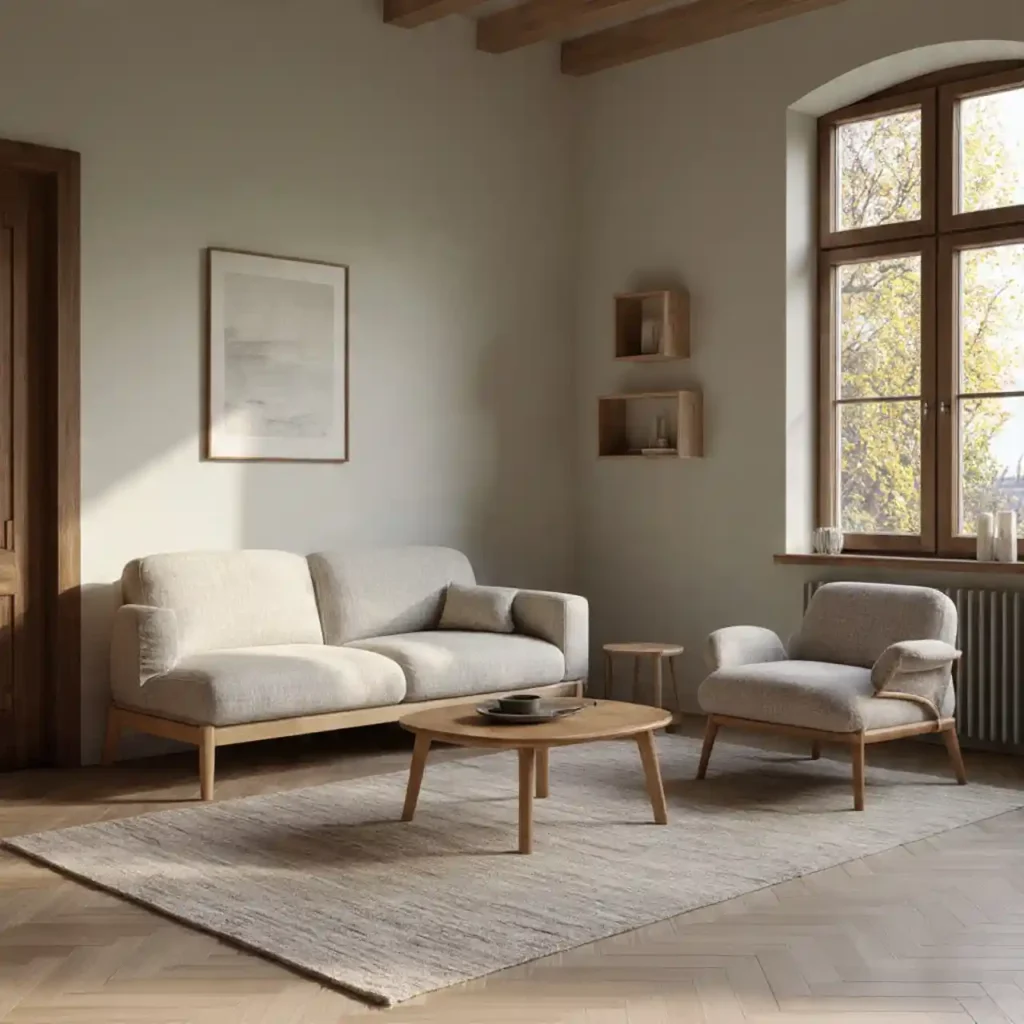
3. Incorporate Natural Wood Elements
Use wood in furniture, flooring, or décor accents to add warmth. Lighter or medium-toned woods create a Scandinavian touch, while dark woods add Japanese elegance. Natural textures anchor the minimalist design.
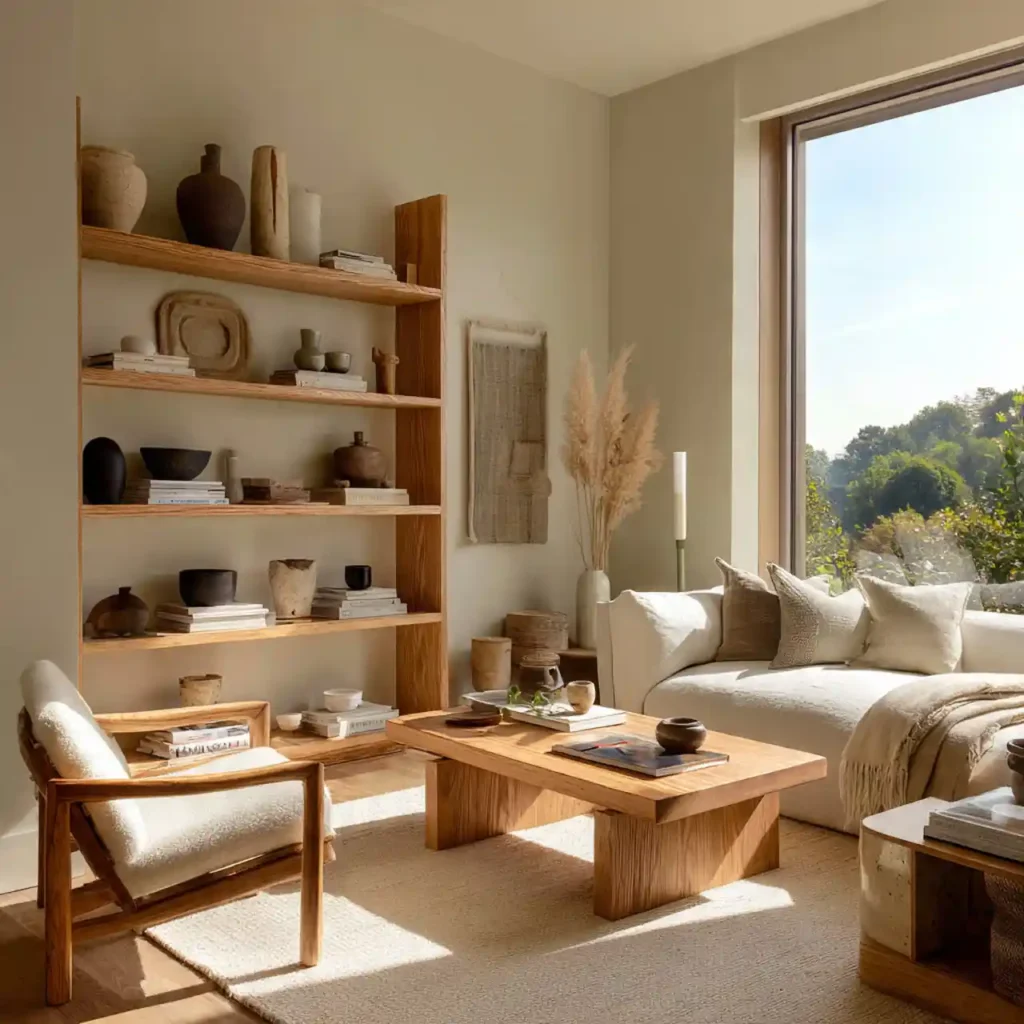
4. Layer Textures Subtly
Mix soft textiles like wool, linen, and cotton with hard surfaces like wood and stone. Layering textures adds depth and comfort without clutter. It maintains the balance between Scandinavian coziness and Japanese simplicity.
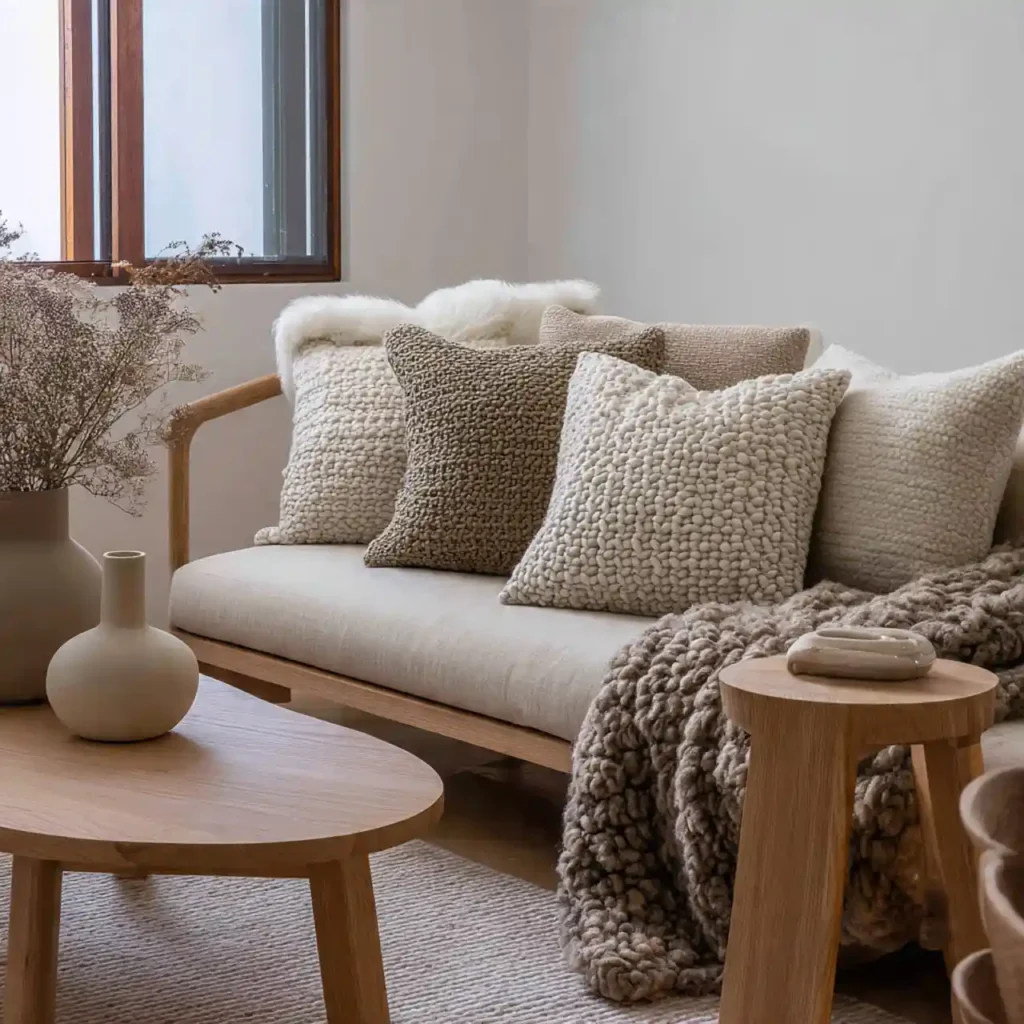
5. Choose Functional Minimal Décor
Every piece should have a purpose; avoid unnecessary décor. Think bowls, vases, and lighting that are both functional and beautiful. This approach keeps your space calm and uncluttered.
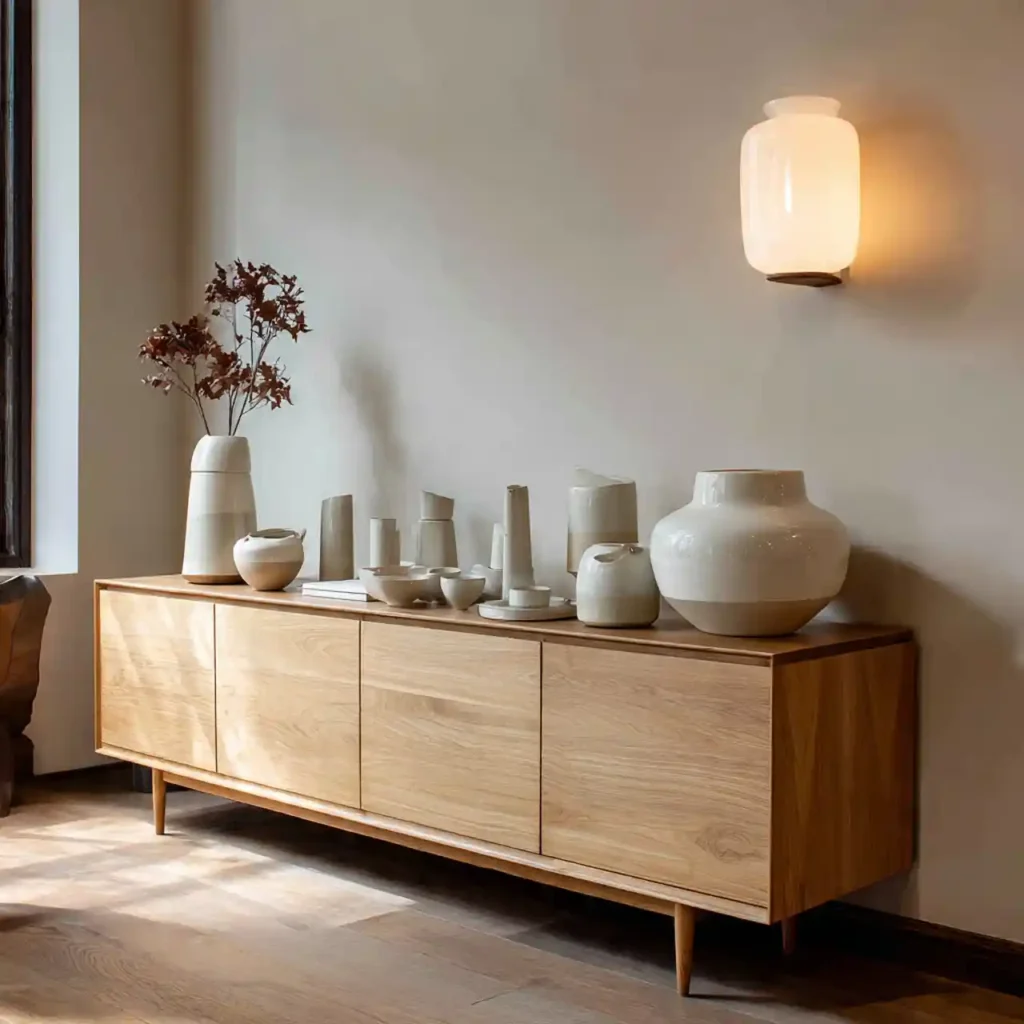
6. Add Indoor Plants for Serenity
Greenery brings life and calm energy to the room. Opt for bonsai, fiddle leaf fig, or simple leafy plants in ceramic pots. Plants soften the minimal lines and enhance the natural vibe.
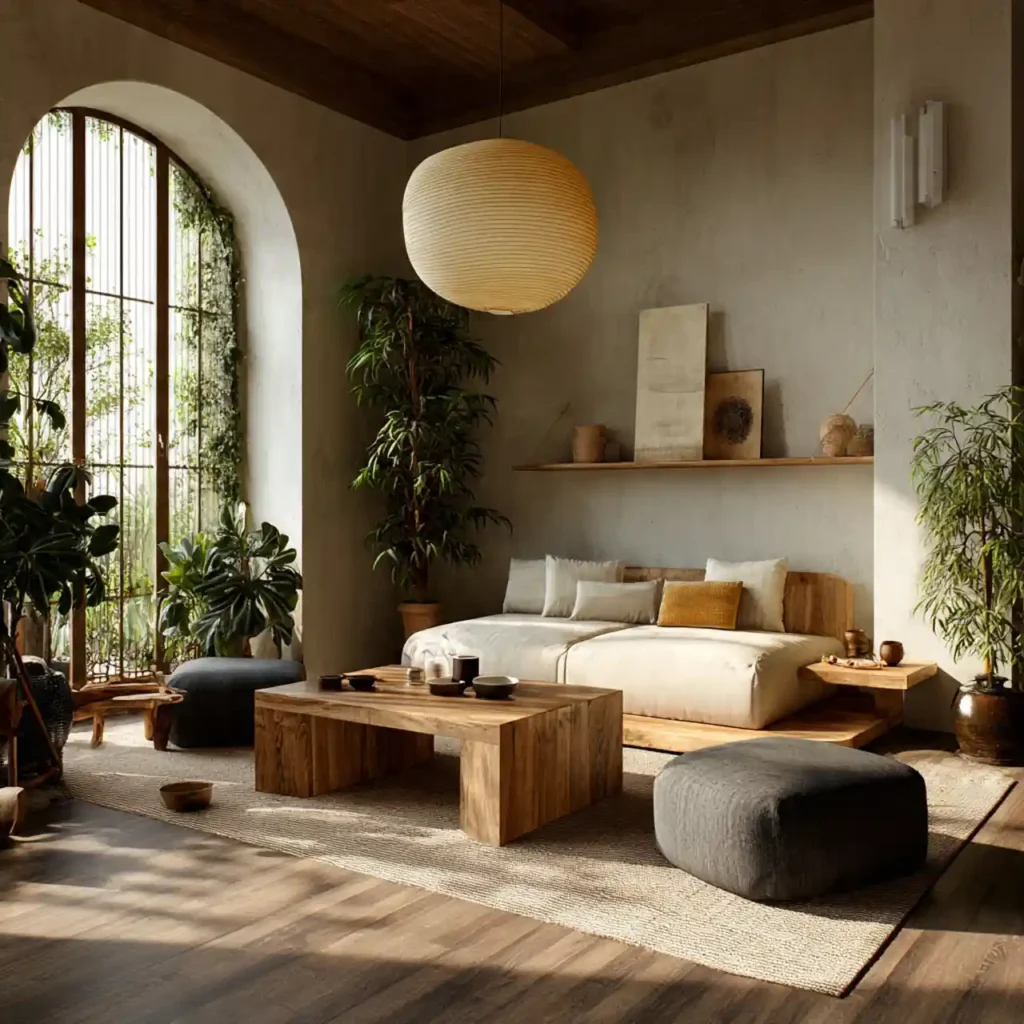
7. Opt for Minimalist Wall Art
Choose simple, abstract, or nature-inspired artwork. Keep frames slim and colors muted to maintain a peaceful aesthetic. Art should complement, not overwhelm, the space.
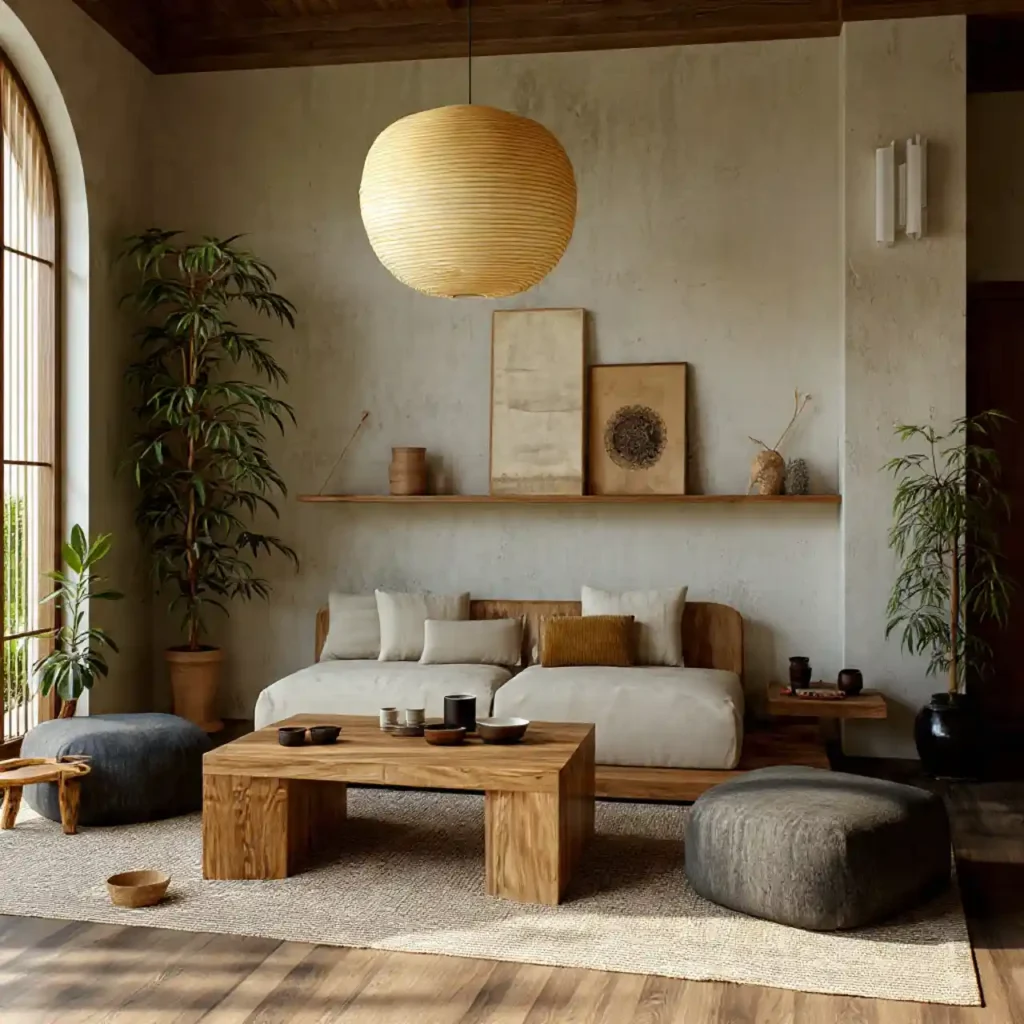
8. Integrate Woven or Textured Rugs
Natural fiber rugs like jute, sisal, or wool enhance warmth and texture. They create a cozy feel while staying neutral and minimal. Layer rugs subtly for depth.
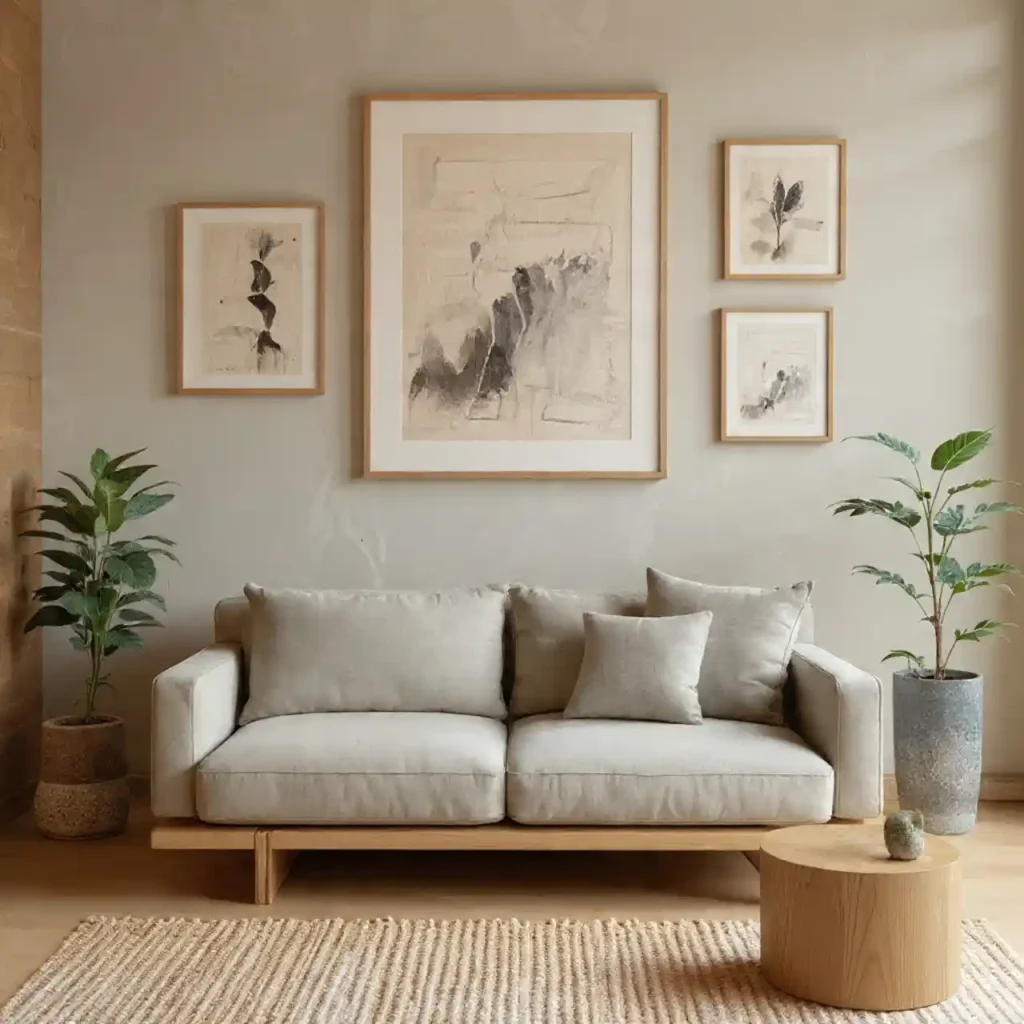
9. Use Simple Lighting Fixtures
Opt for lantern-style lamps or simple pendant lights. Choose warm lighting to enhance the cozy feel. Minimalist designs keep focus on the room’s textures and materials.
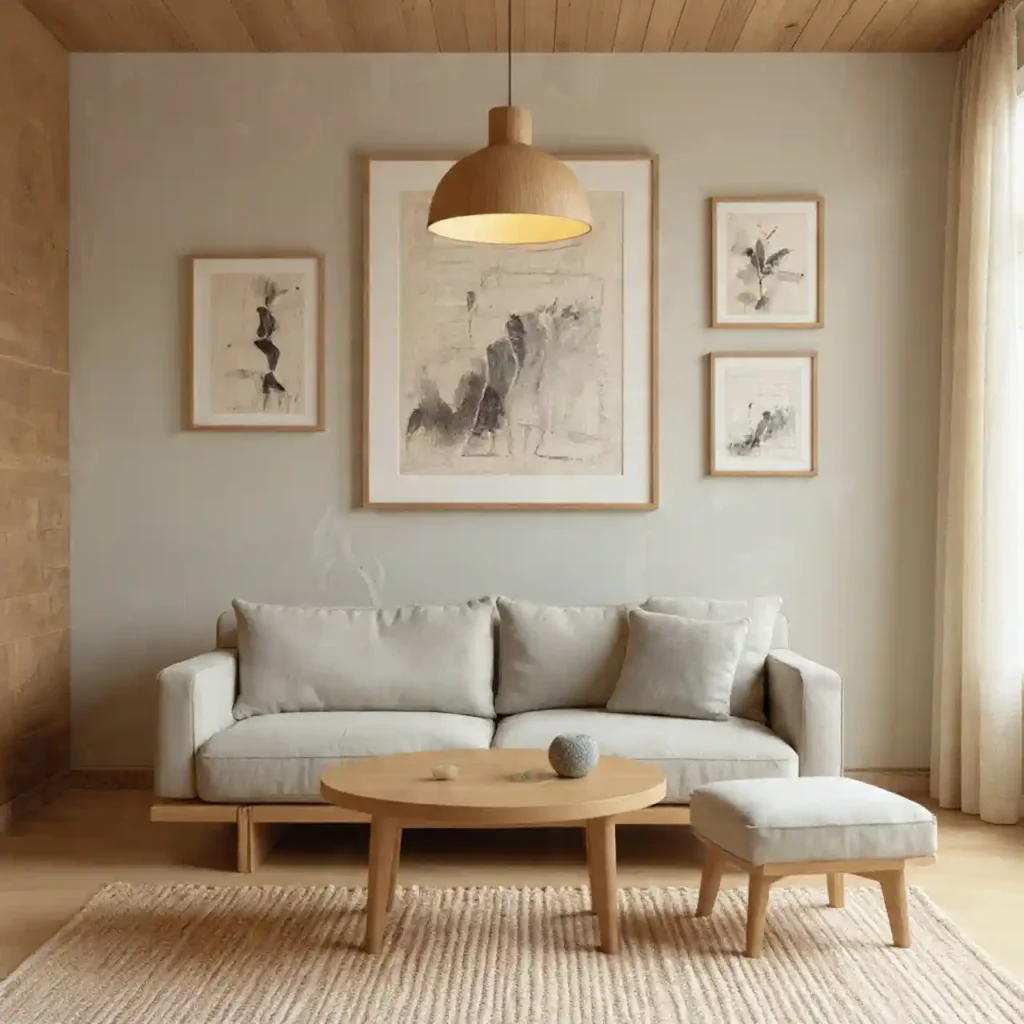
10. Incorporate Sliding or Shoji-Inspired Screens
Sliding panels or shoji-style dividers add Japanese elegance. They help separate areas subtly without heavy walls. Their simplicity enhances the clean, minimal aesthetic.
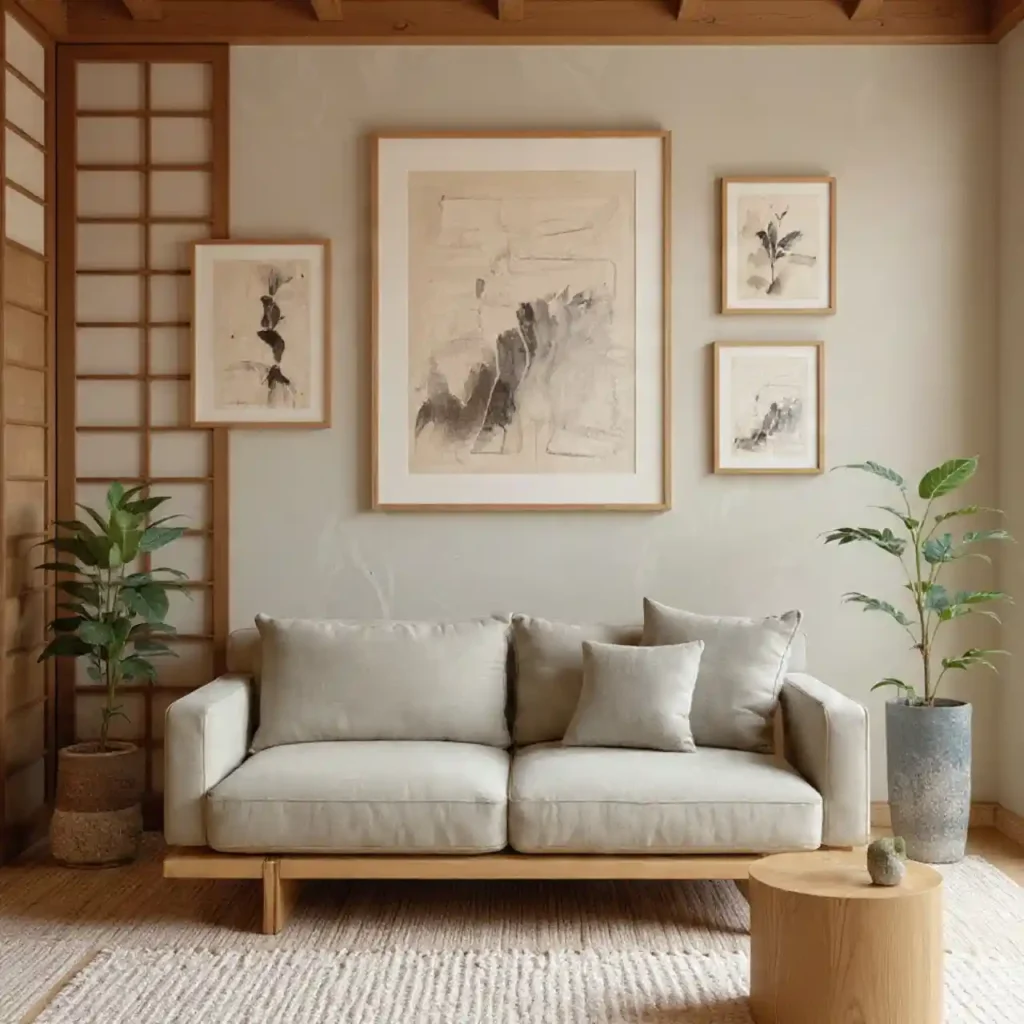
11. Mix Scandinavian and Japanese Textiles
Combine Scandinavian patterns with Japanese simplicity. Soft geometric prints or muted stripes can be layered on sofas or cushions. It balances warmth with minimalism.
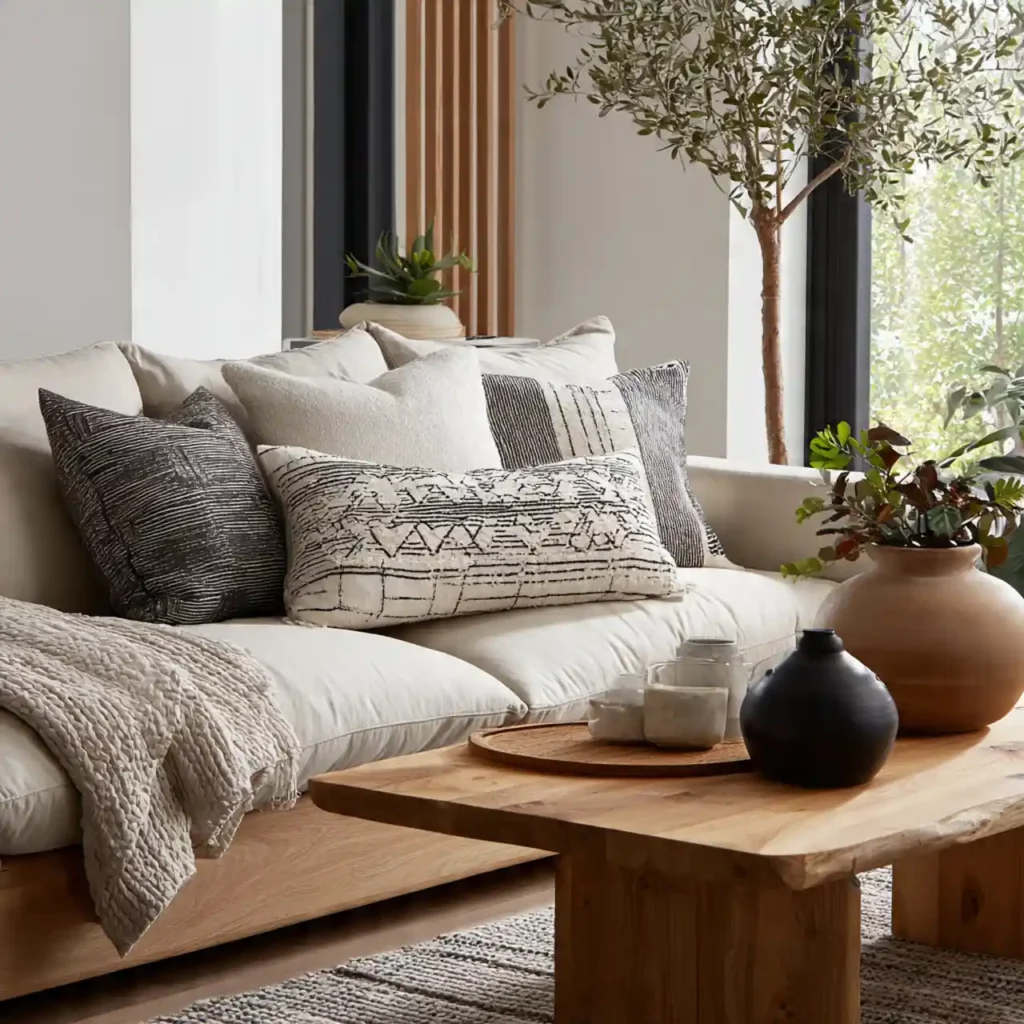
12. Opt for Clean-Lined Storage Solutions
Choose hidden or minimal storage to keep clutter out of sight. Cabinets or sideboards in light wood help maintain order. Functionality is key in Japandi interiors.
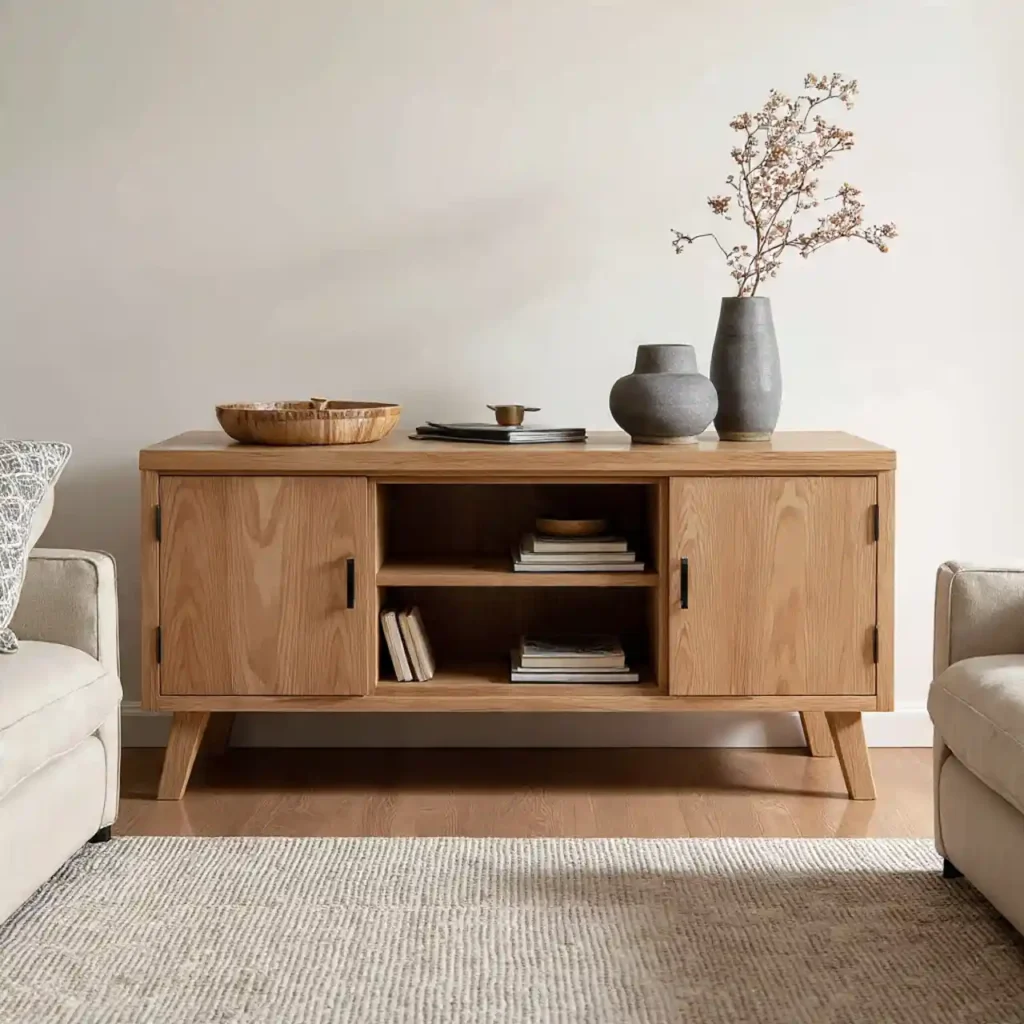
13. Add a Statement Wooden Coffee Table
A solid wood coffee table anchors the room. Choose a simple design with clean lines to avoid visual clutter. Natural finishes enhance warmth and elegance.
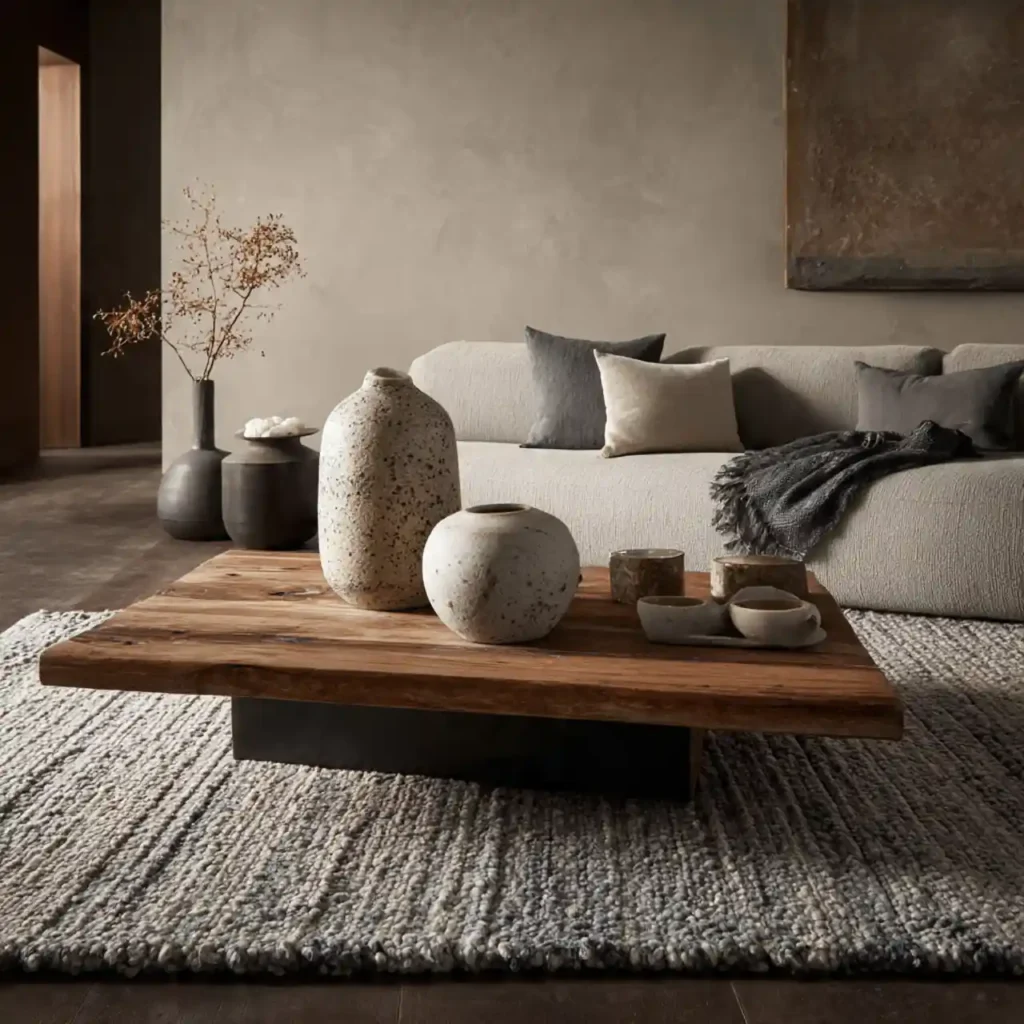
14. Integrate Natural Stone Accents
Small stone accents like trays, vases, or side tables add texture. Neutral stone tones work perfectly with wood and muted walls. They elevate the natural elegance of the space.
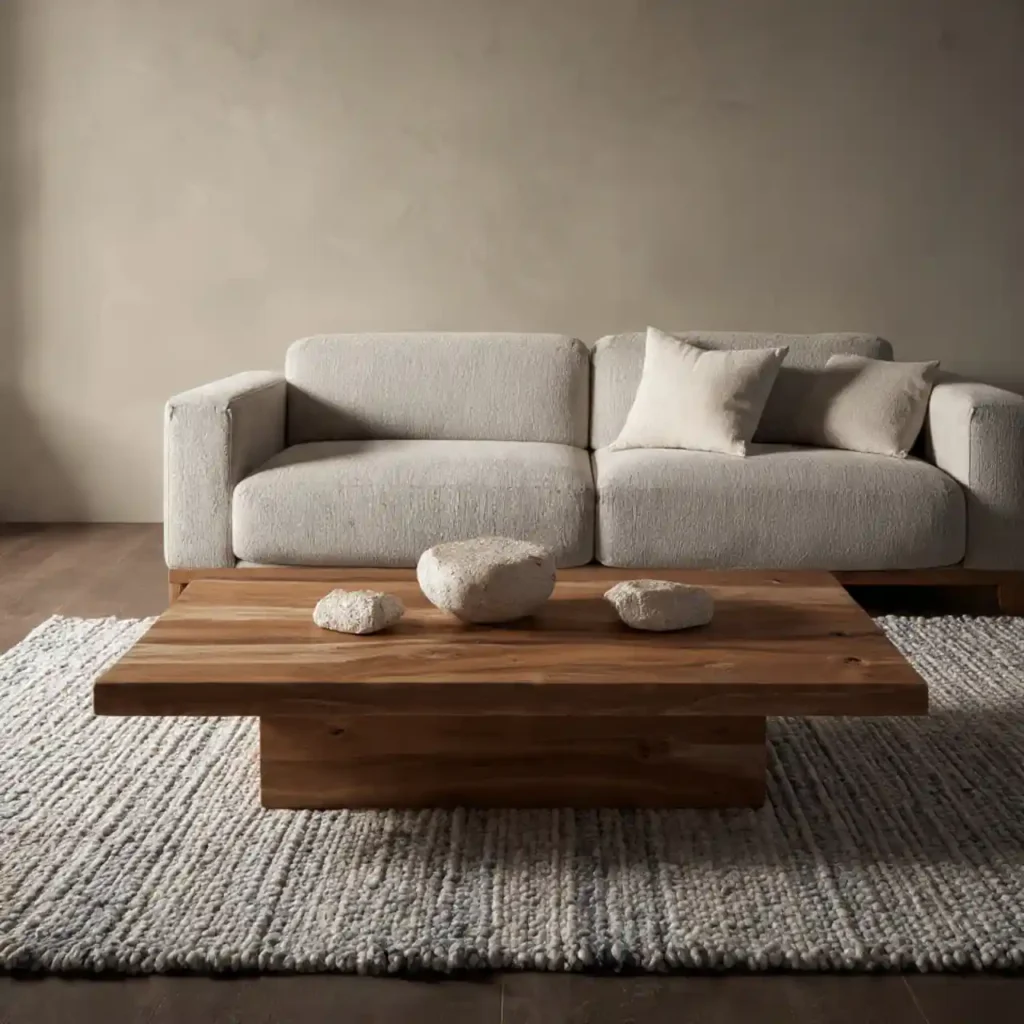
15. Use Soft & Muted Accent Colors
Introduce gentle greens, soft blues, or warm terracotta sparingly. Accents add life without disrupting calm neutrality. Stick to one or two muted colors for consistency.
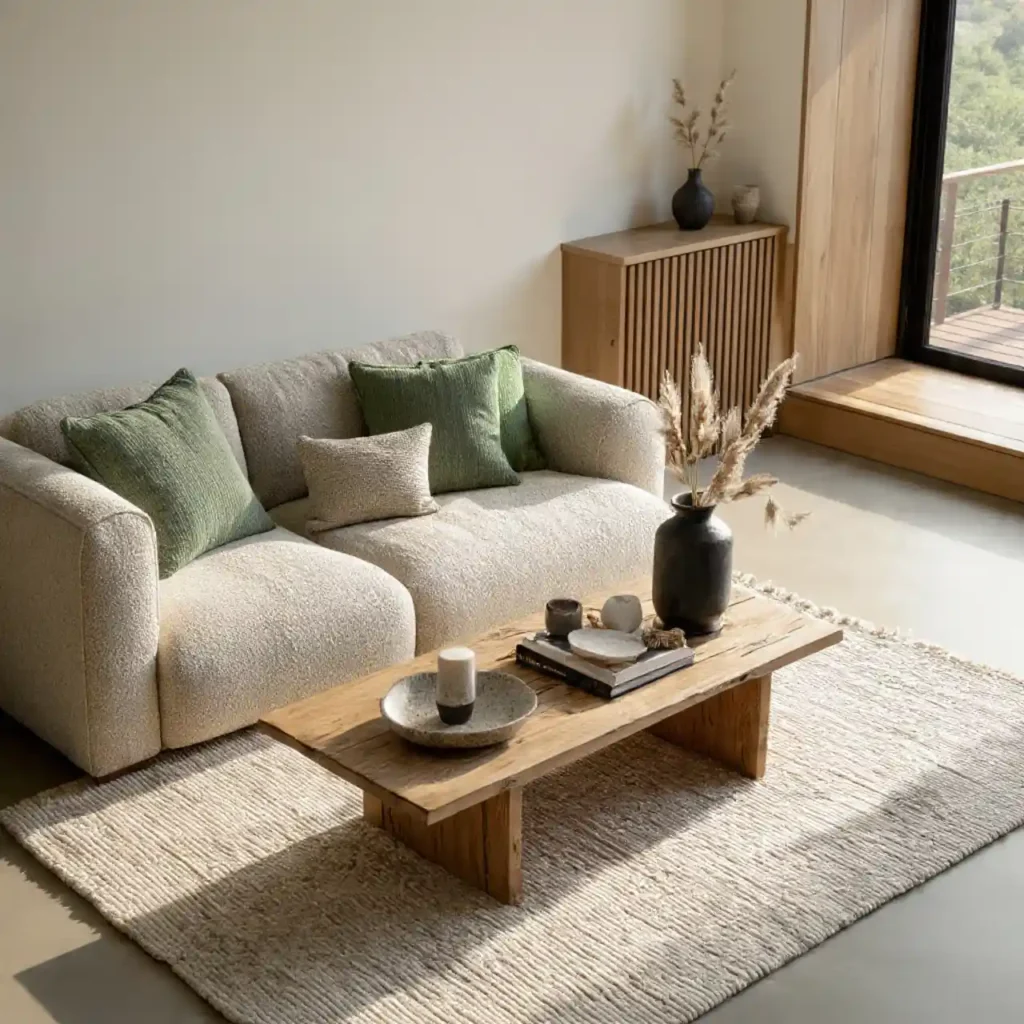
16. Incorporate Minimalist Shelving
Open shelving allows display of functional and decorative items. Keep arrangements simple, with ceramics or small plants. Avoid overcrowding to maintain balance.
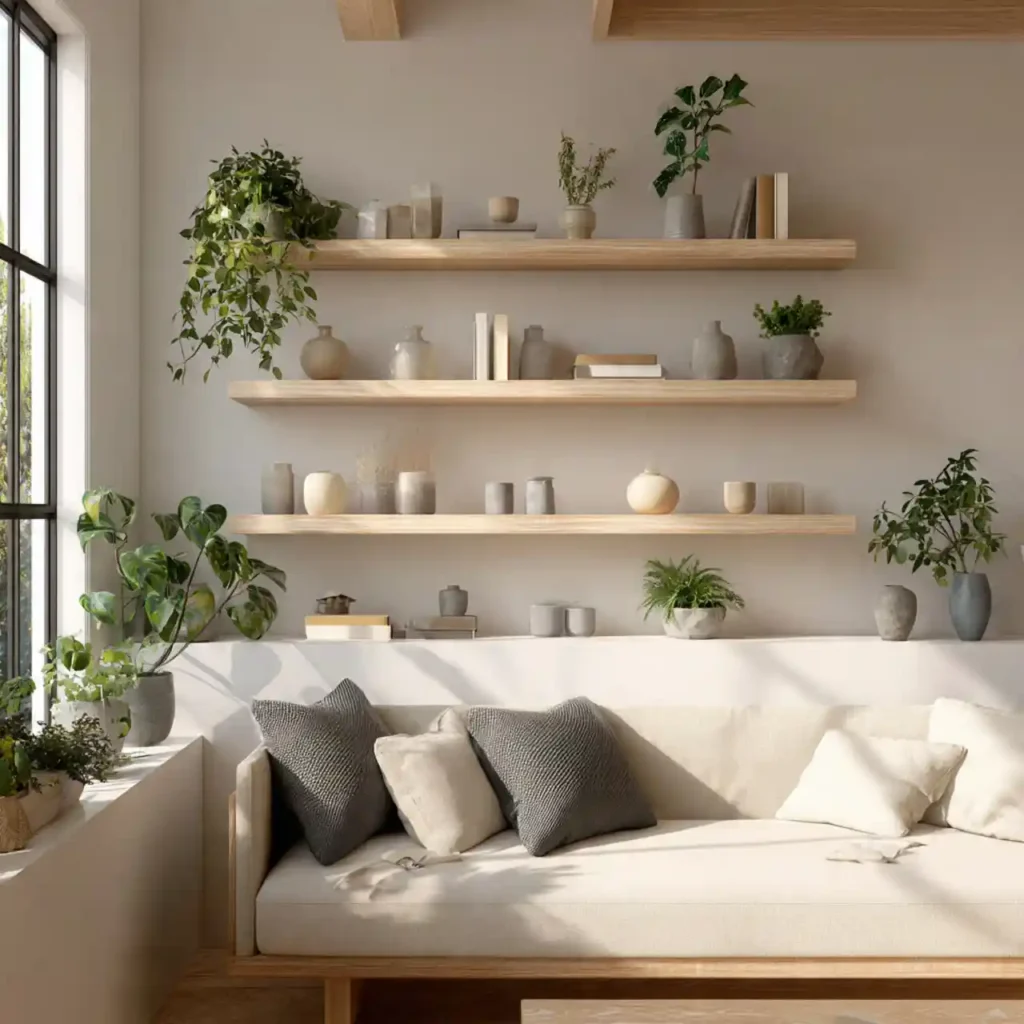
17. Layer Light and Shadow
Use natural sunlight with sheer curtains or screens. Proper lighting enhances textures and creates warmth. Shadows add depth without adding clutter.
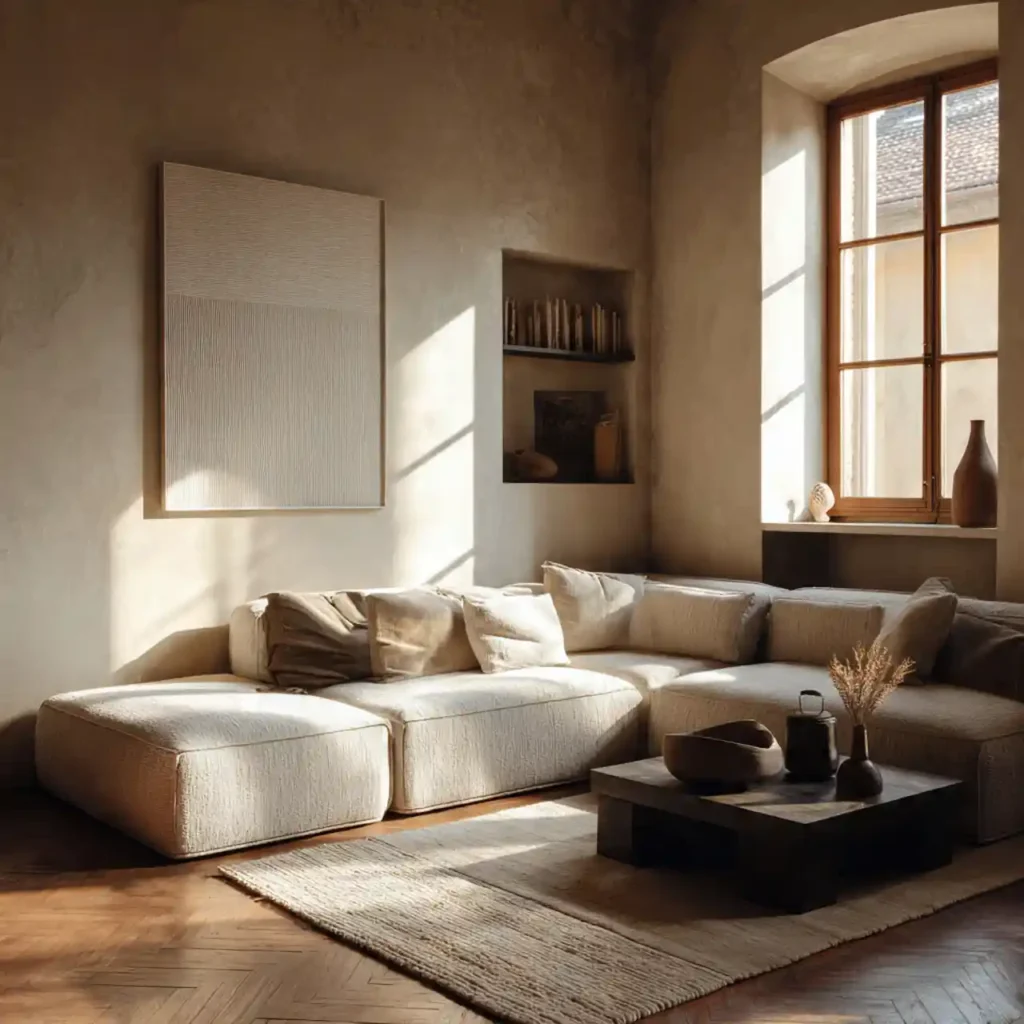
18. Keep Electronics Hidden or Minimal
Conceal TVs and speakers whenever possible. Minimalism works best when tech is unobtrusive. Focus on natural materials and functional décor.
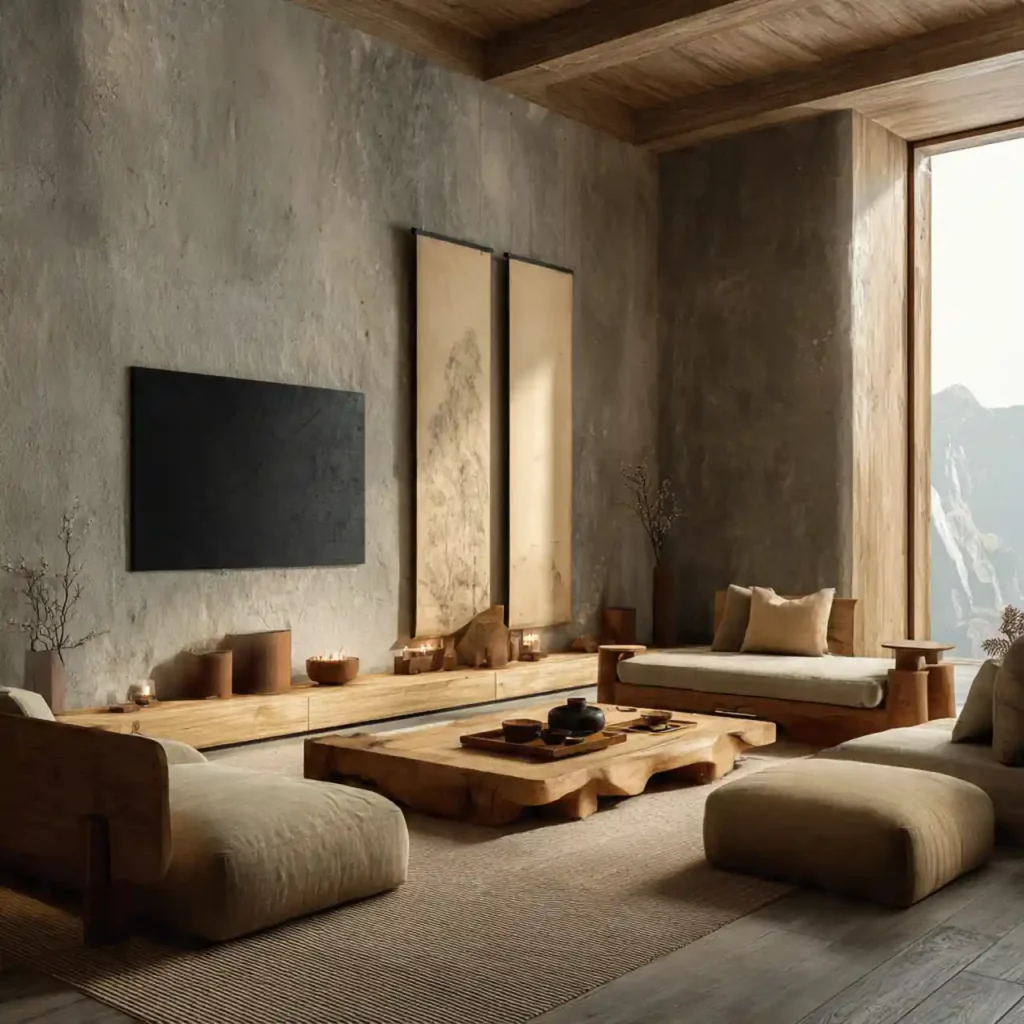
19. Incorporate Scandinavian-Style Chairs
Wooden chairs with simple upholstery add function and style. Choose neutral tones or natural finishes. They blend effortlessly with Japandi aesthetics.
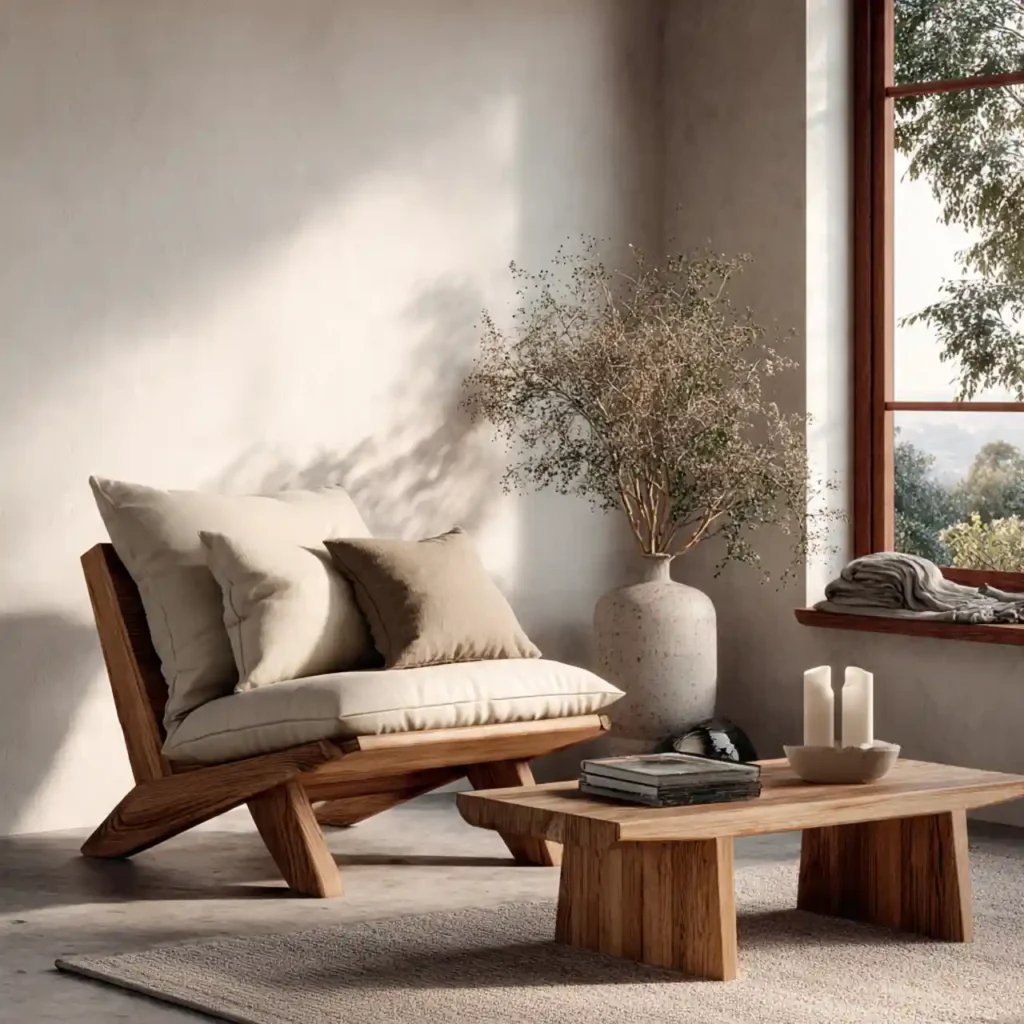
20. Add Subtle Metallic Accents
Use small brass or matte black hardware to complement wood and neutrals. Subtle shine adds elegance without cluttering the minimalist look.
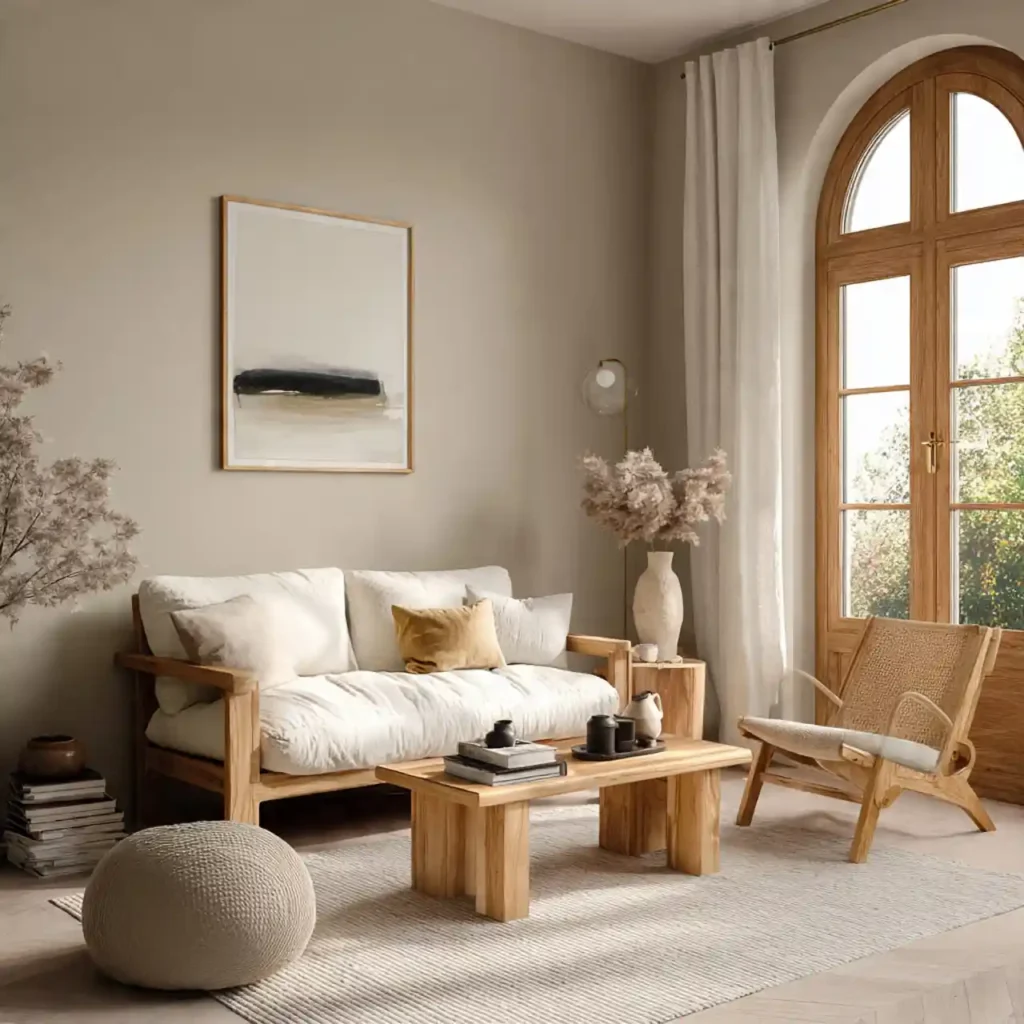
21. Include Natural Fiber Baskets
Baskets for blankets or storage add texture and functionality. Choose woven materials for warmth. They maintain the natural and minimalist feel.
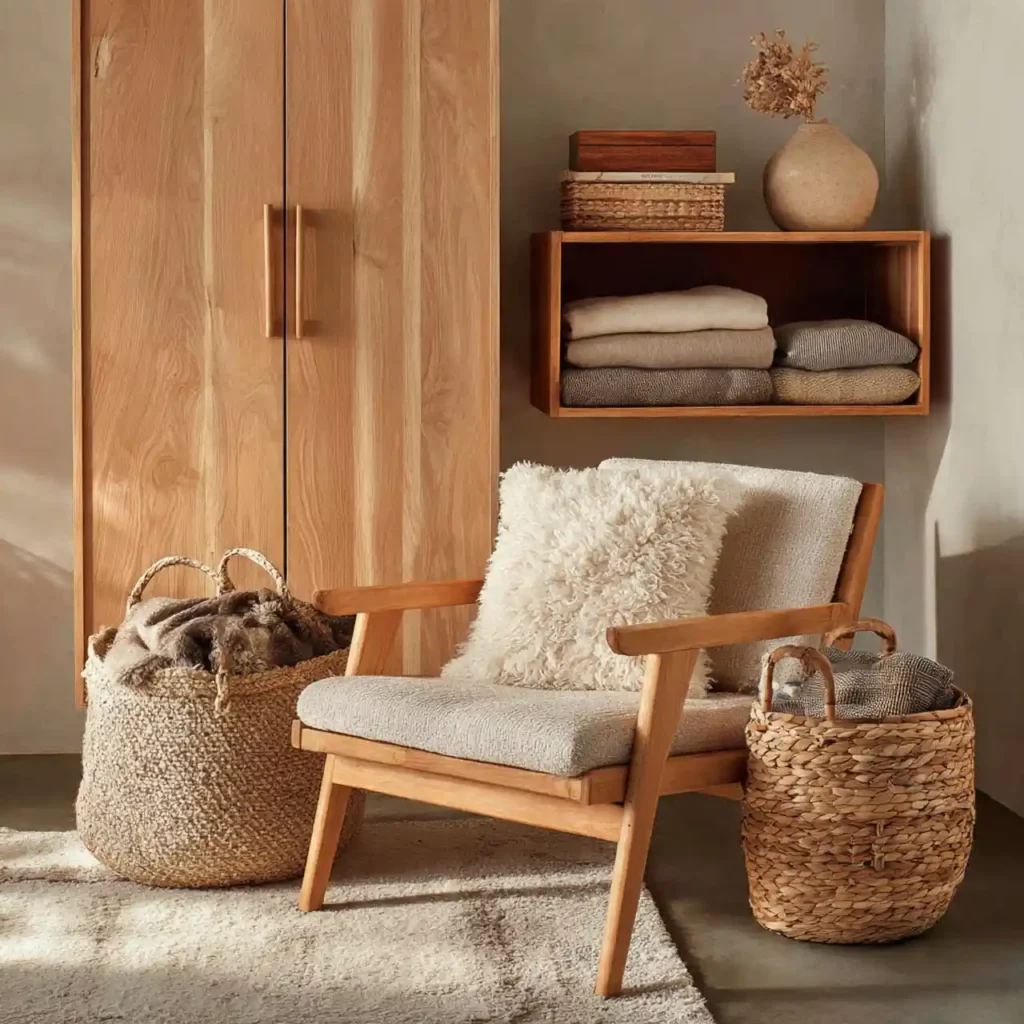
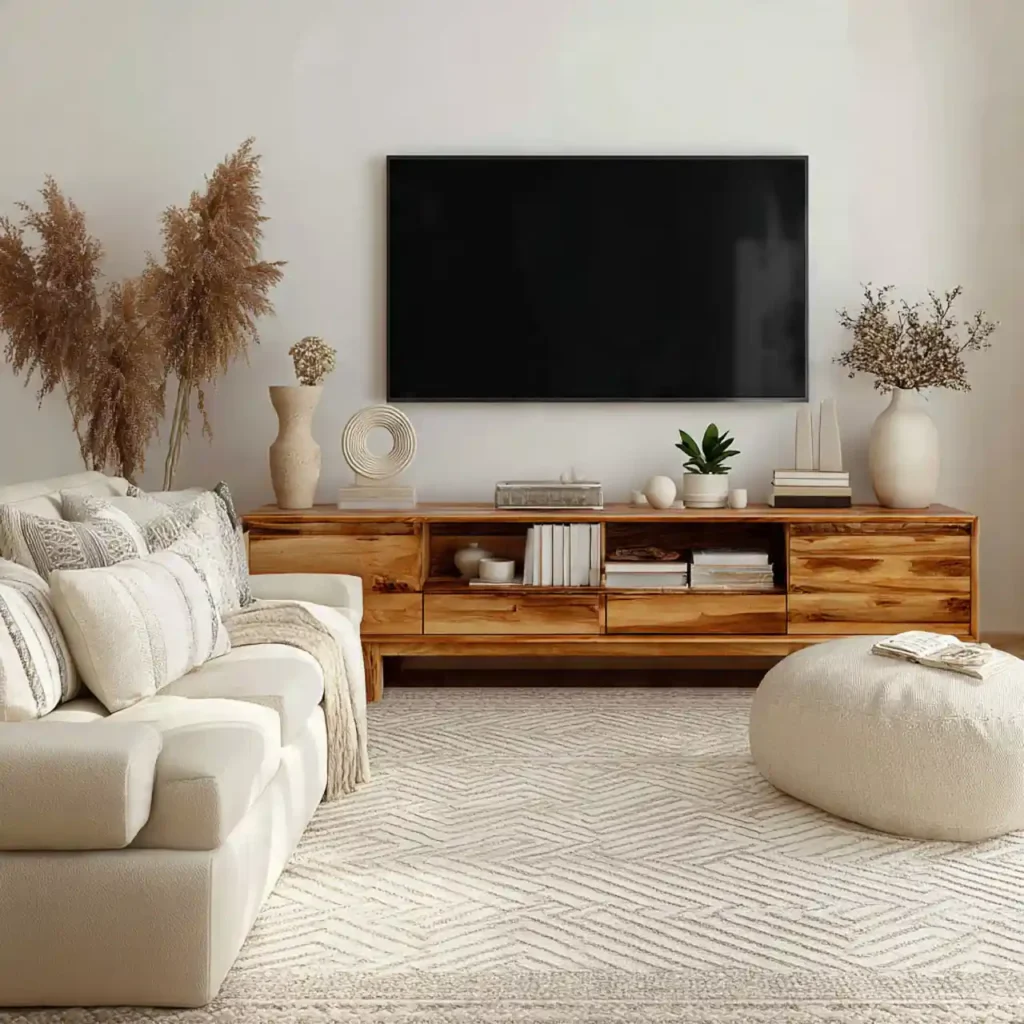
22. Use Low & Wide TV Stands
Select a low-profile media console in light wood. It keeps the space airy and aligns with minimal Japandi lines. Avoid bulky furniture that blocks visual flow.
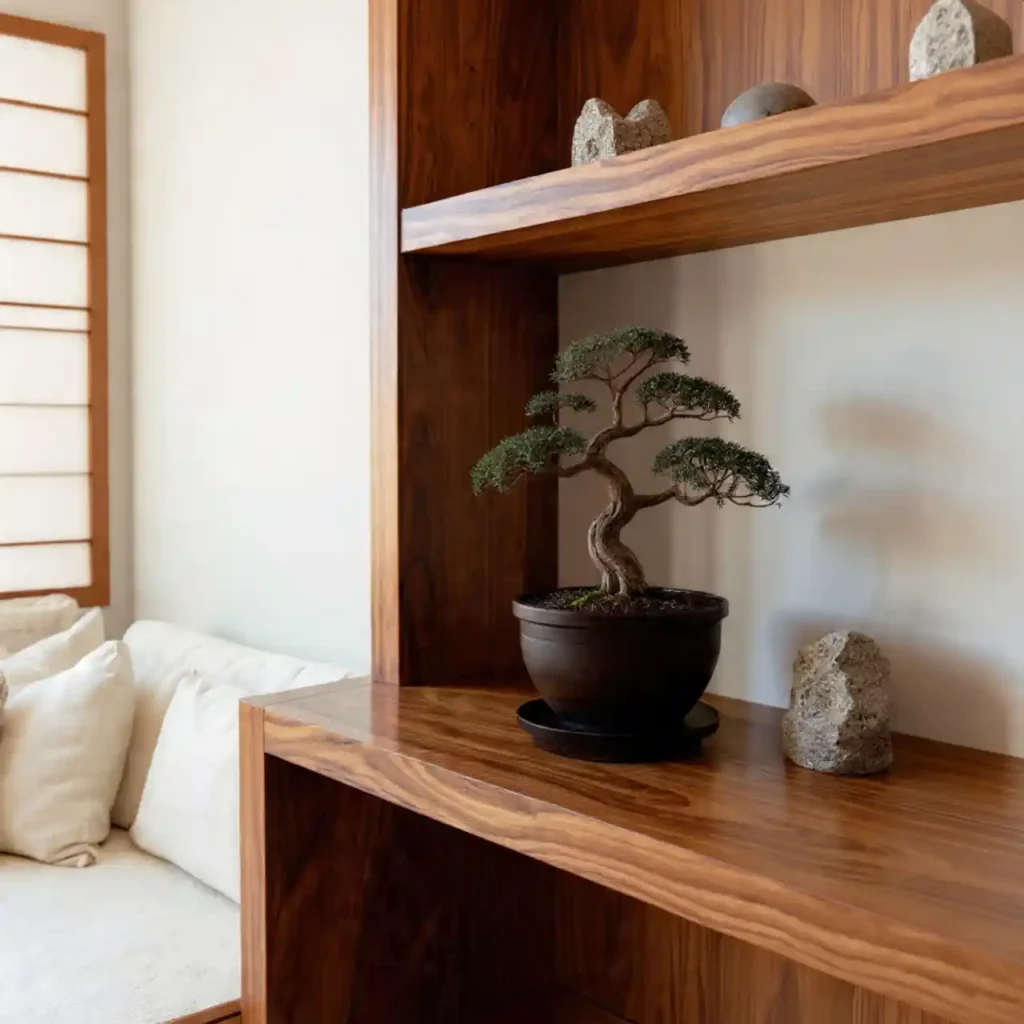
23. Incorporate Zen-Inspired Décor
Include calming elements like bonsai trees, bamboo vases, or small rocks. Zen décor brings mindfulness and peace to your living room.
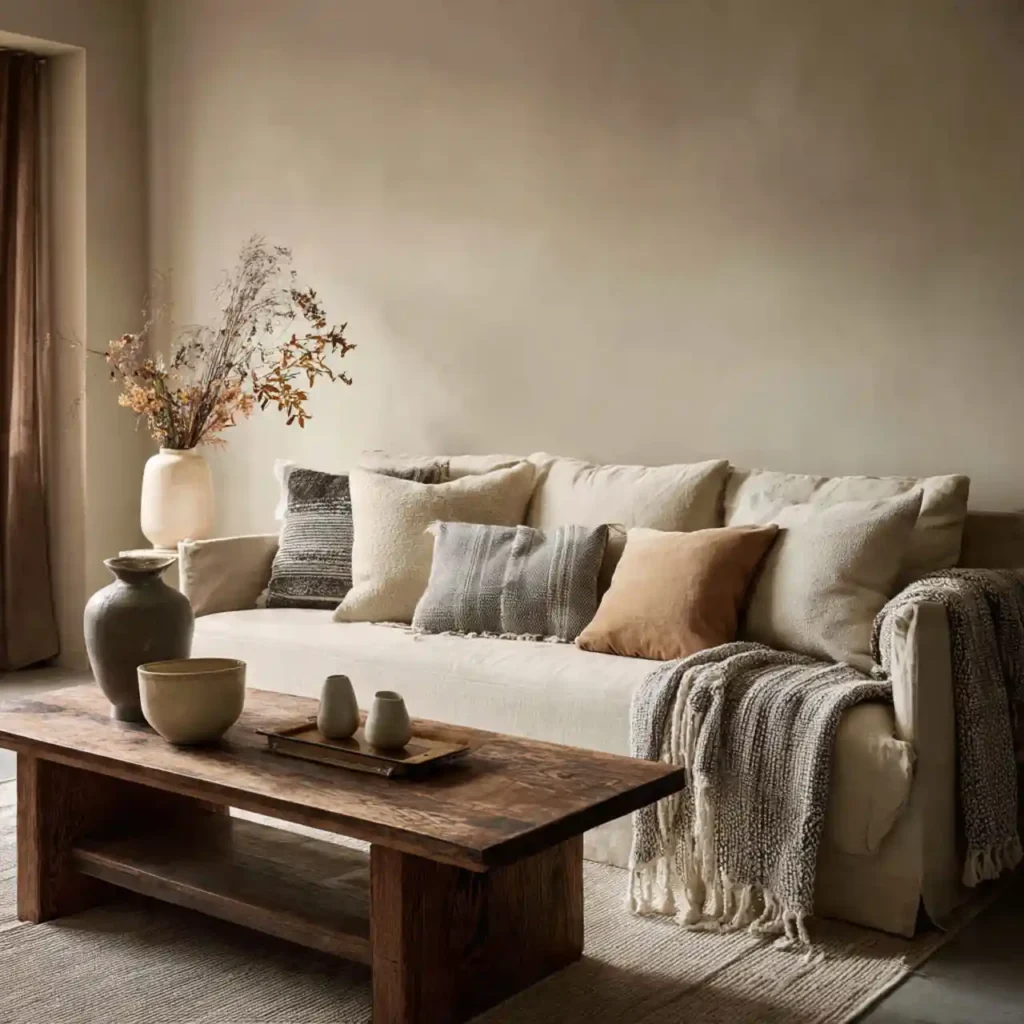
24. Layer Soft Throws and Cushions
Textiles should be layered subtly for warmth and comfort. Stick to neutral and muted tones. They soften the minimal lines without overwhelming the space.
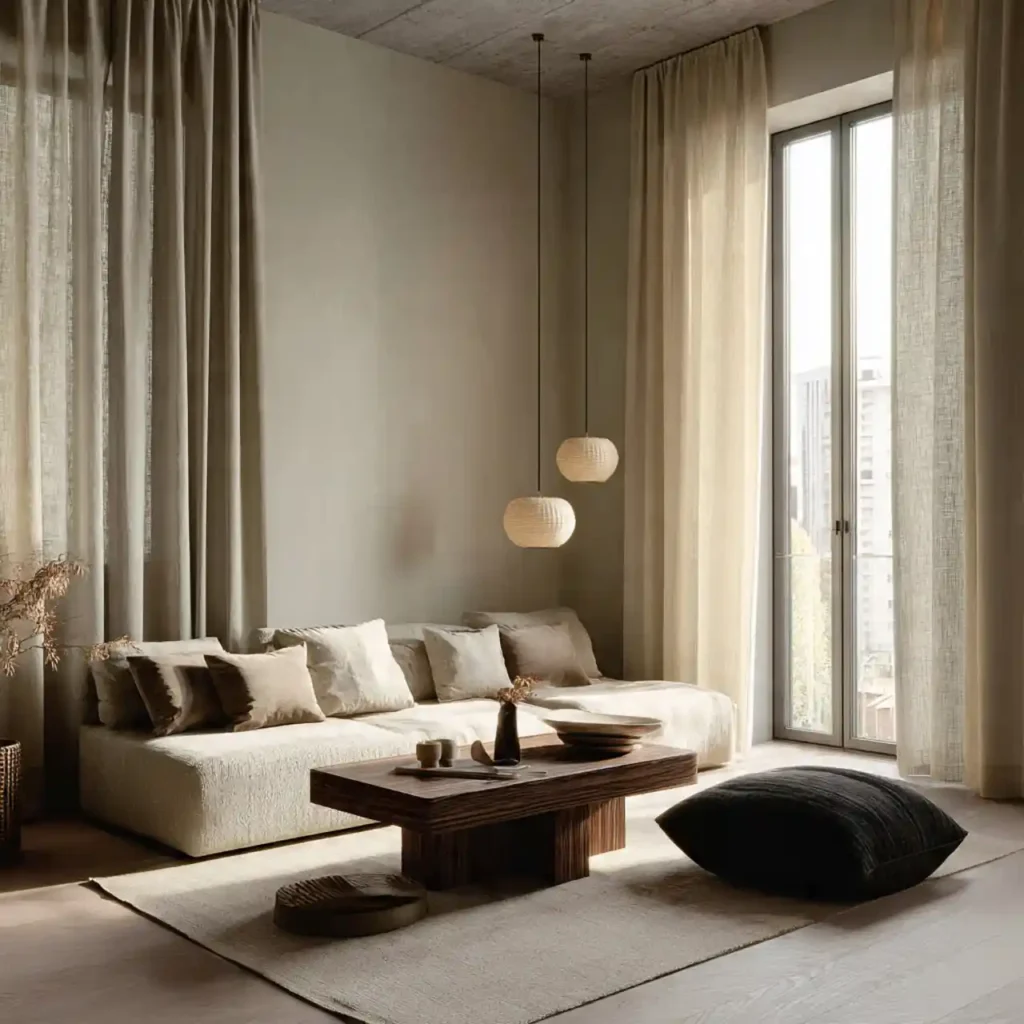
25. Choose Simple Window Treatments
Sheer or linen curtains keep the room airy and light-filled. Stick to natural tones to maintain serenity. They enhance the organic aesthetic of Japandi style.
26. Incorporate Minimalist Artwork
Select art pieces with muted colors or line drawings. Keep frames simple to avoid distraction. Art should enhance calm and elegance.
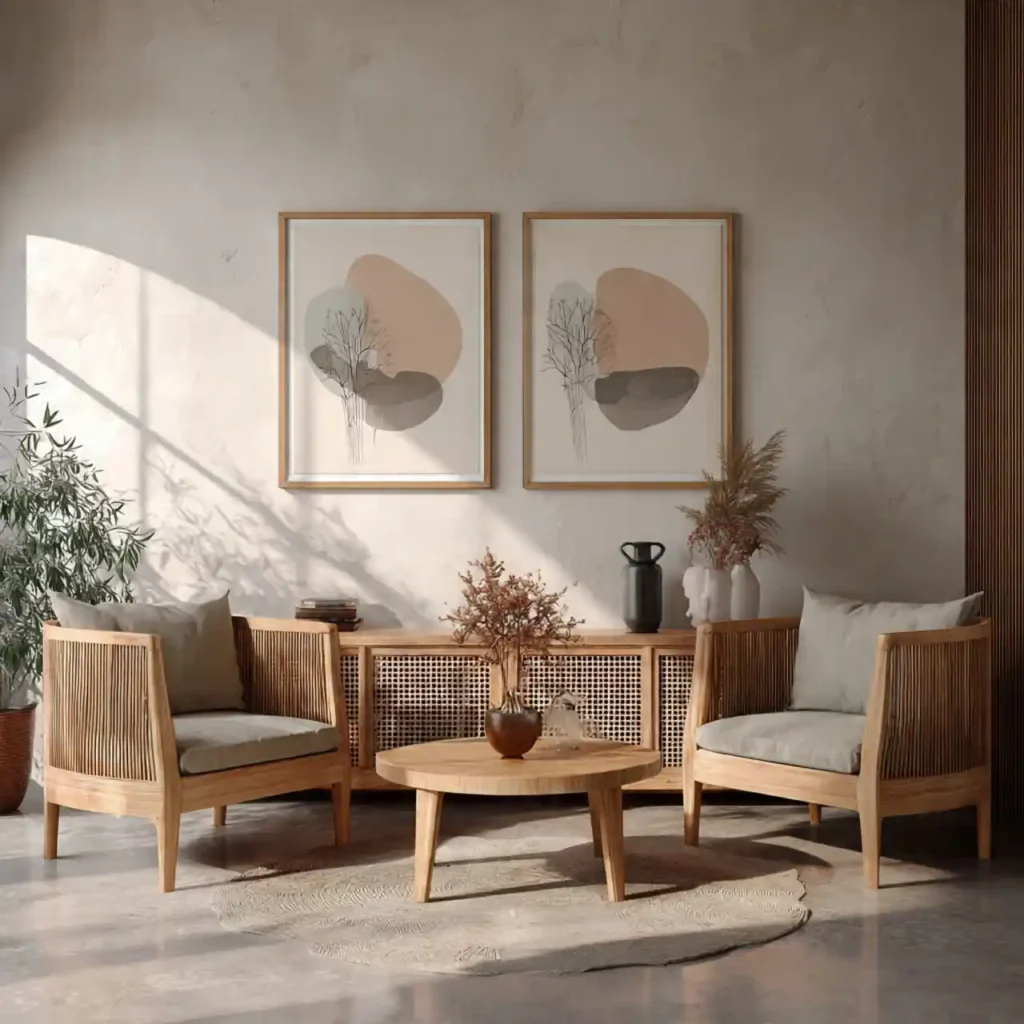
27. Mix Matte and Natural Finishes
Use matte finishes for décor and natural wood for furniture. This contrast adds depth while maintaining simplicity. It creates a balanced modern look.
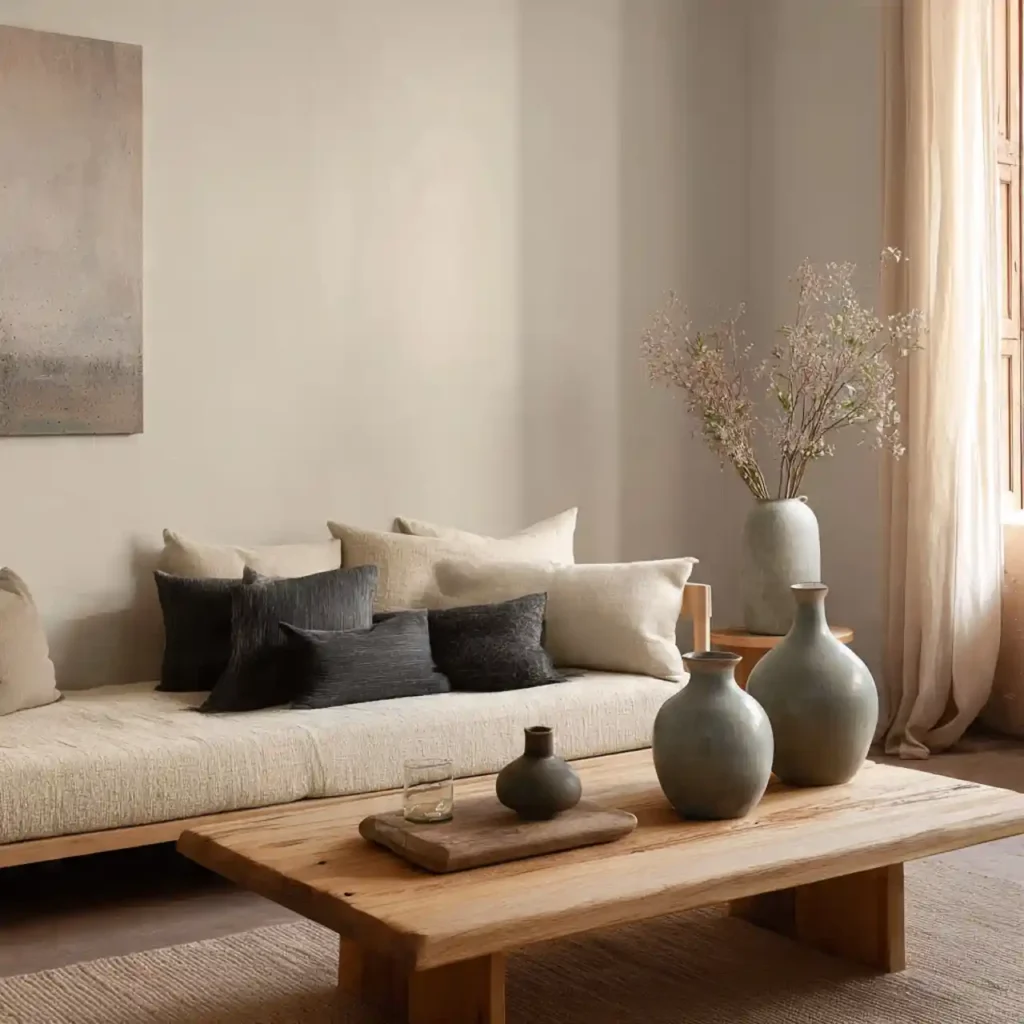
28. Add Scandinavian Lighting Touches
Use simple Scandinavian-style floor lamps or pendant lights. Light fixtures with clean lines complement Japandi furniture. They provide soft, functional illumination.
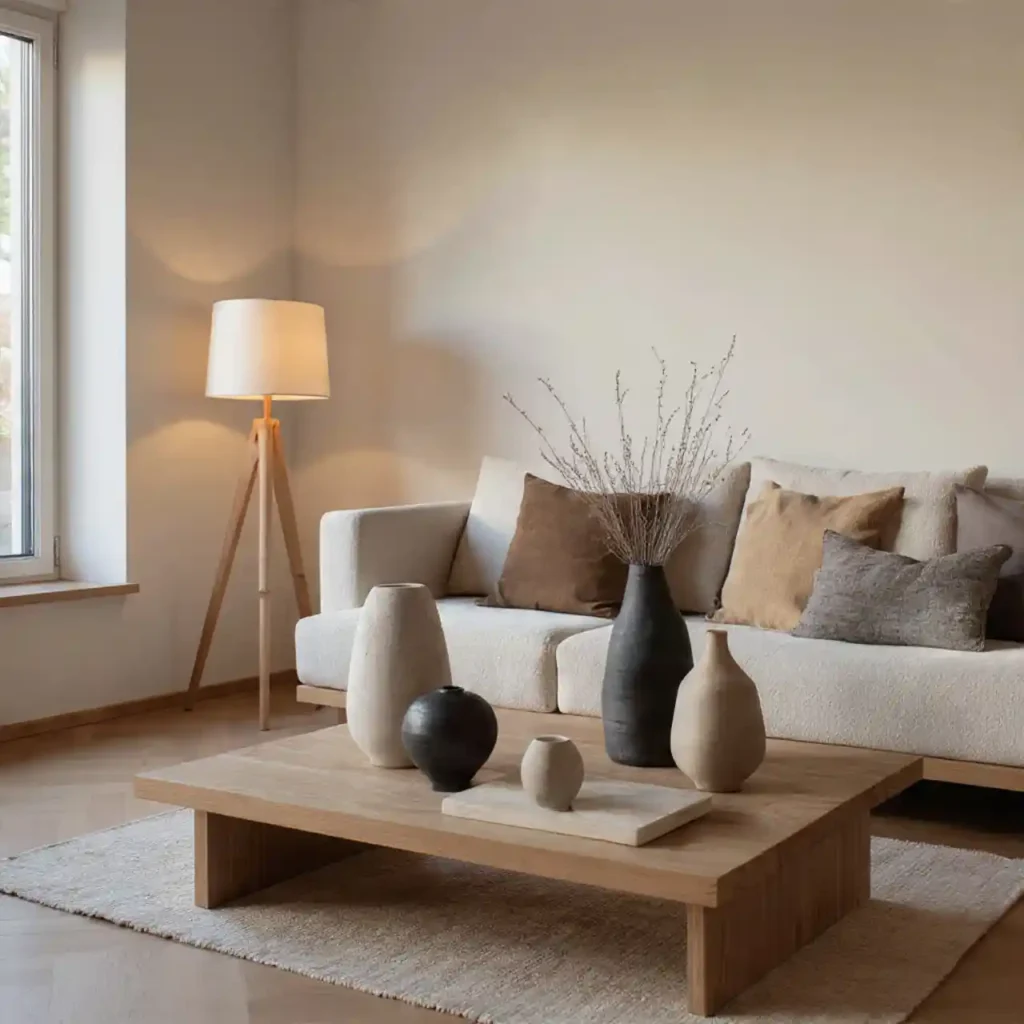
29. Incorporate Low Decorative Shelves
Use short shelves for books, ceramics, or plants. This keeps the room functional without cluttering vertical space. It aligns with minimal design principles.
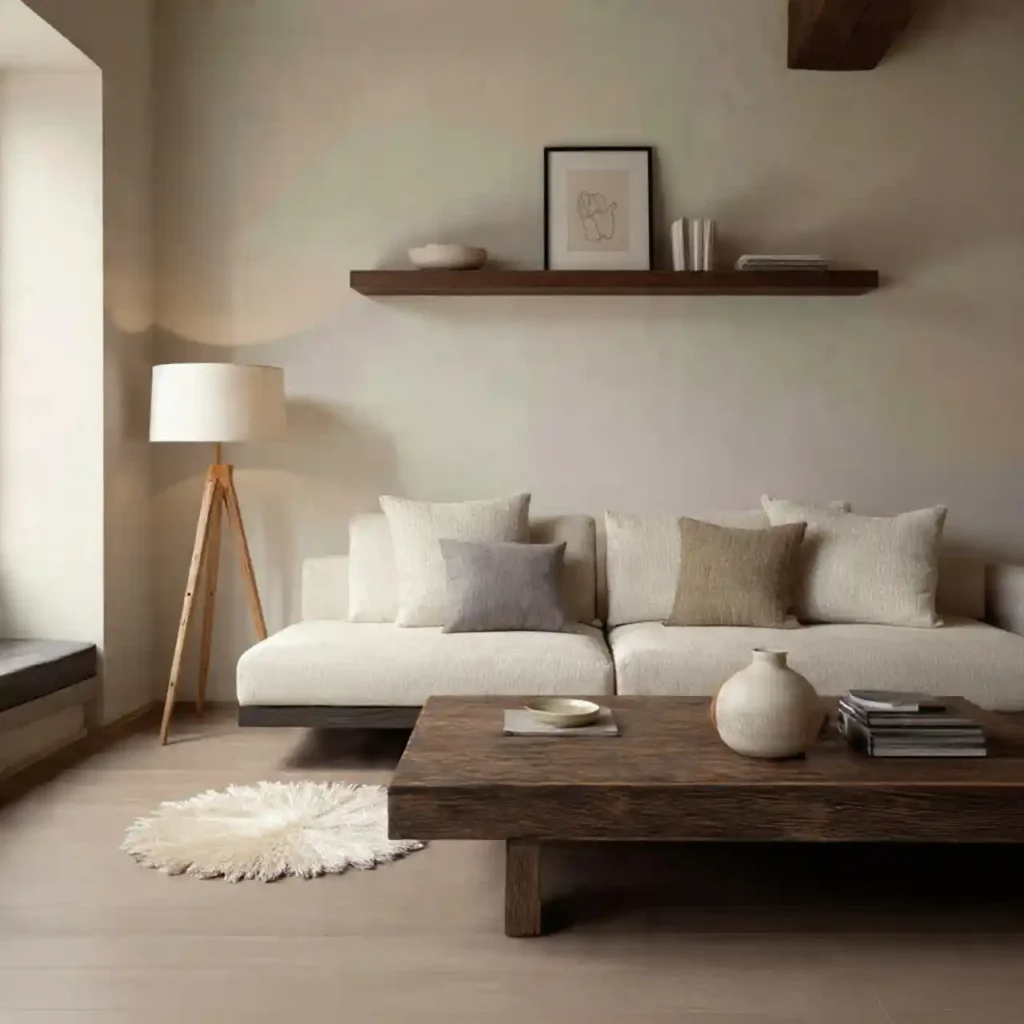
30. Keep Decorative Elements Minimal
Less is more in Japandi design. Limit decorative items to functional or meaningful pieces. This maintains the tranquil and stylish atmosphere.
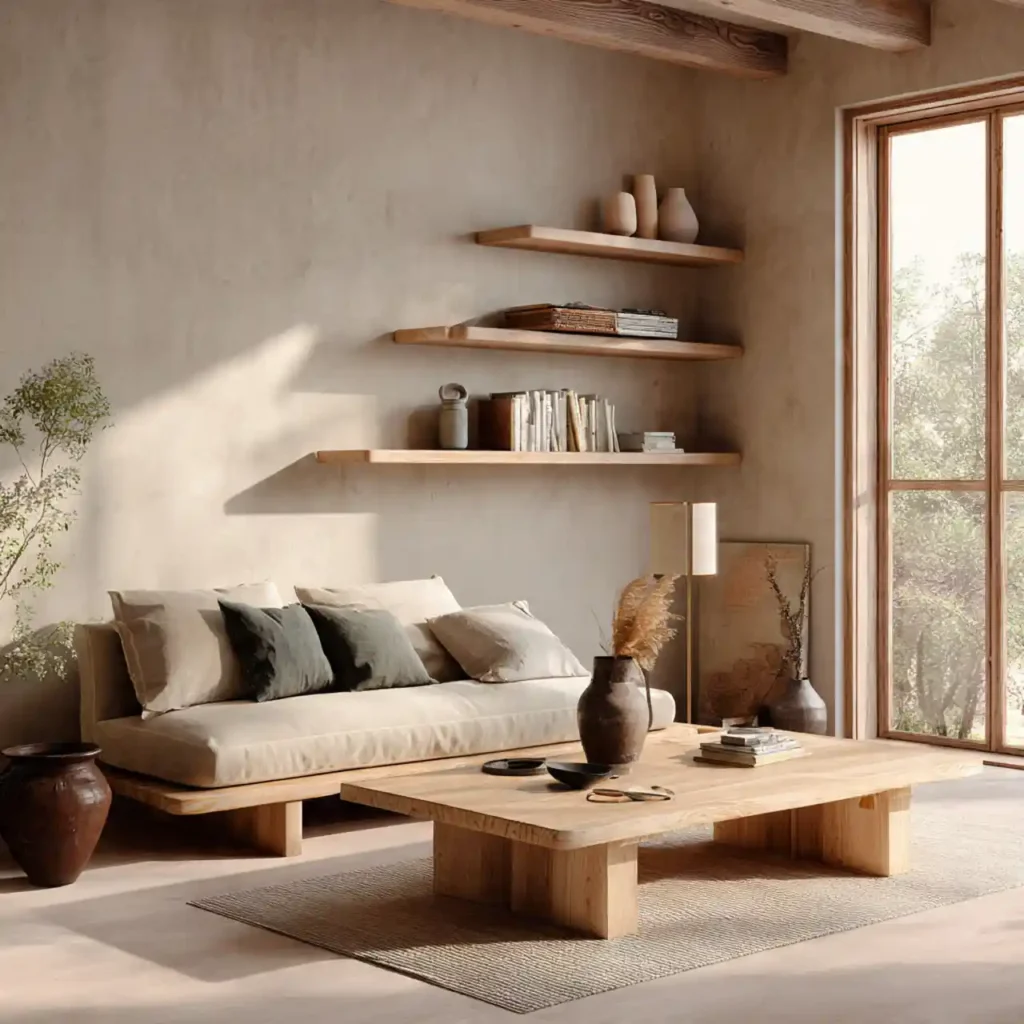
Final Thoughts: Japandi Living Room Ideas
Japandi living rooms are all about balance: simplicity, natural materials, muted tones, and functional beauty. By combining Japanese minimalism with Scandinavian warmth, you can create a calm, cozy, and stylish space. Use these 30 Japandi Living Room Ideas as inspiration to design a living room that feels serene, elegant, and timeless.